Whitmer Decks | Custom Decks in Virginia
Custom decks in Northern Virginia

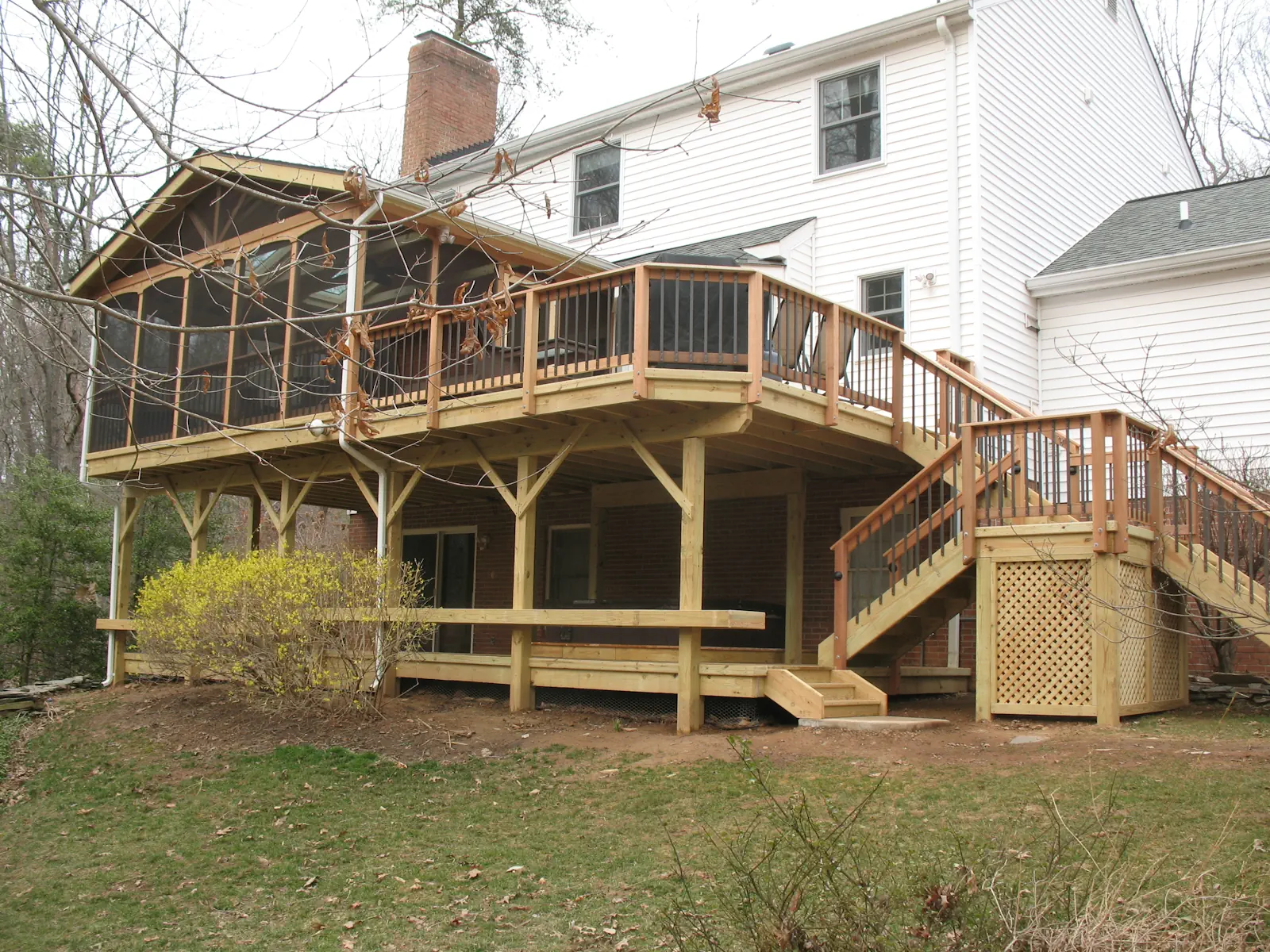
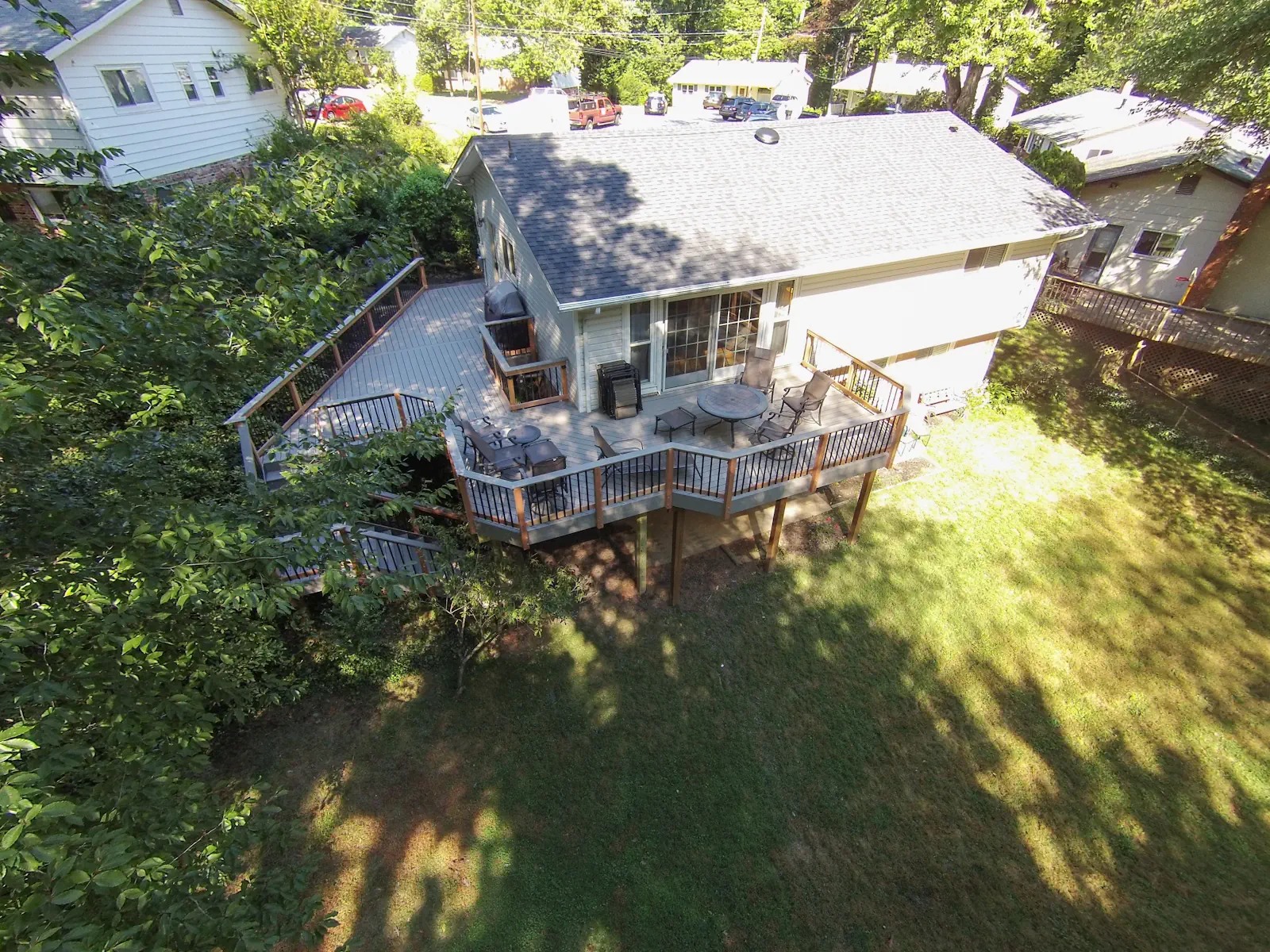
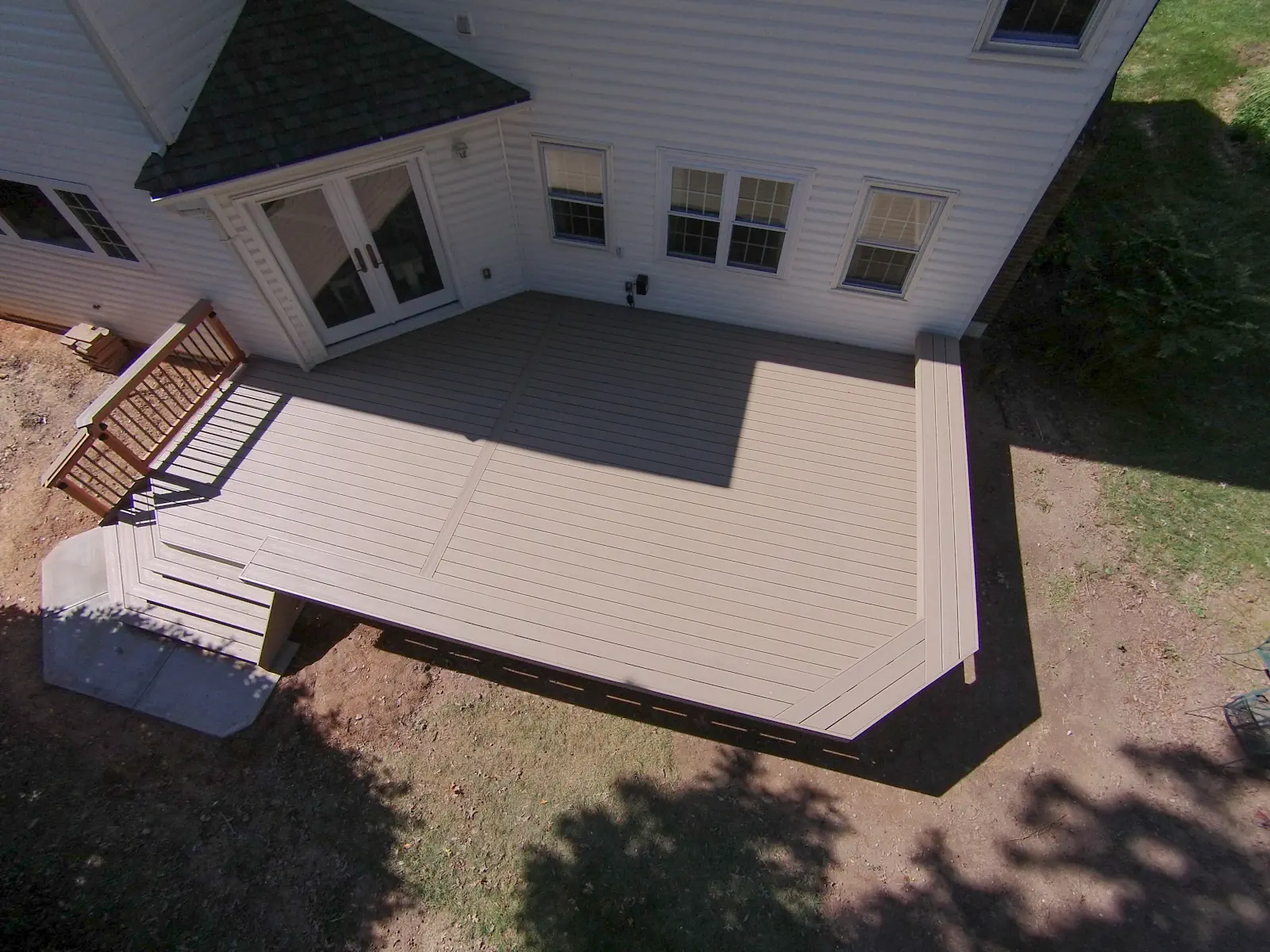
Deck Builders in Northern Virginia

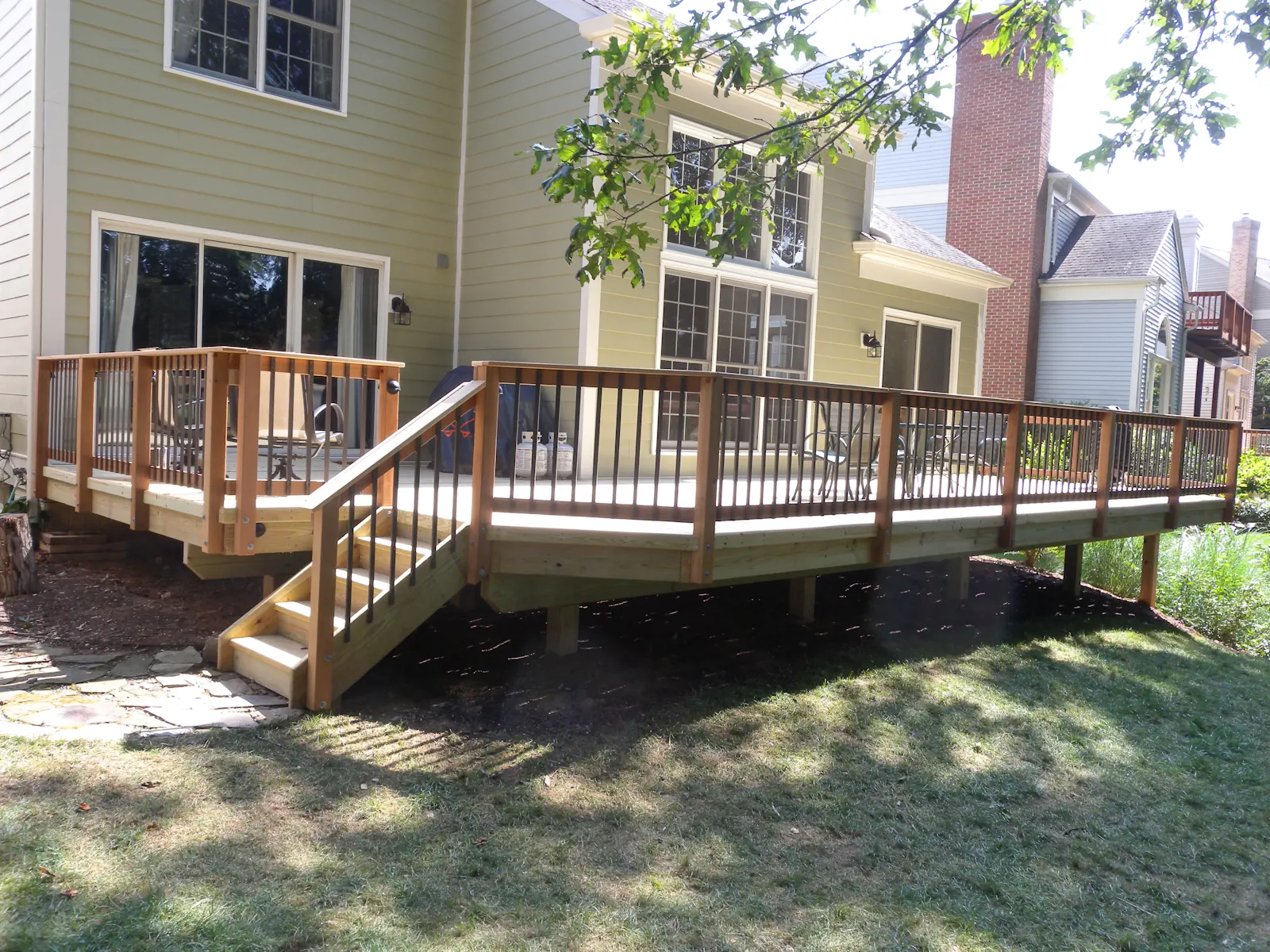
We've designed and built decks across Fairfax, Loudoun, Arlington, Prince William, and Alexandria since 2004.
Composite, PVC, tropical hardwood, and Moso bamboo — from a straightforward replacement to a full backyard remodel with a porch, patio, and kitchen designed as one space.

Who builds custom decks in Northern Virginia?

Whitmer Decks is a design-build deck company founded in 2004 by Cliff and Lisa Whitmer and based in Dulles. We're a TimberTech Pro Platinum and TrexPro Gold contractor and a member of NADRA, the North American Decking and Railing Association, and Northern Virginia Magazine has named us a top deck builder seven years running. We file permits in Fairfax, Loudoun, Arlington, Prince William, and Alexandria, and in the towns of Vienna and Herndon and the city of Leesburg.

Composite, hardwood, or bamboo?

This is the first question almost everyone asks, and the answer has changed in the last few years. Three materials are worth considering. Pine is covered at the end, briefly.

Composite and PVC. We're a TimberTech Pro Platinum contractor and a TrexPro Gold contractor, and we install a lot of both. Against stained wood, most composite lines pay for themselves in year one or two; a few take up to five, depending on the line and the stain you'd otherwise be buying. Maintenance is a wash-down.

What we tell people before they sign: it gets hot in full afternoon sun, it scratches, and a scratch can't be sanded out the way wood can. If a board ever needs replacing, there's no guarantee the manufacturer is still making that color. And it is not as pretty as real wood. We say that even though we install it every week.

Tropical hardwood. Tigerwood, garapa, red balau, massaranduba, and teak. The surprise for most homeowners is the price — hardwood runs in line with mid-range composite and under most premium composite lines. It's harder than any composite, it ages to silver if you let it or holds its color with an annual oil, and it looks like what it is. We've built four hardwood decks in the last few months and have two more under contract. We steer away from ipe; the species above perform comparably and are sourced more responsibly.

Moso bamboo. Tongue-and-groove bamboo decking — dense, dimensionally stable, and one of the most sustainable deck surfaces available. We have a direct relationship with Moso and pricing on their tongue-and-groove boards that nobody else in the area can offer. One built recently, another under contract, and more homeowners asking about it every month.

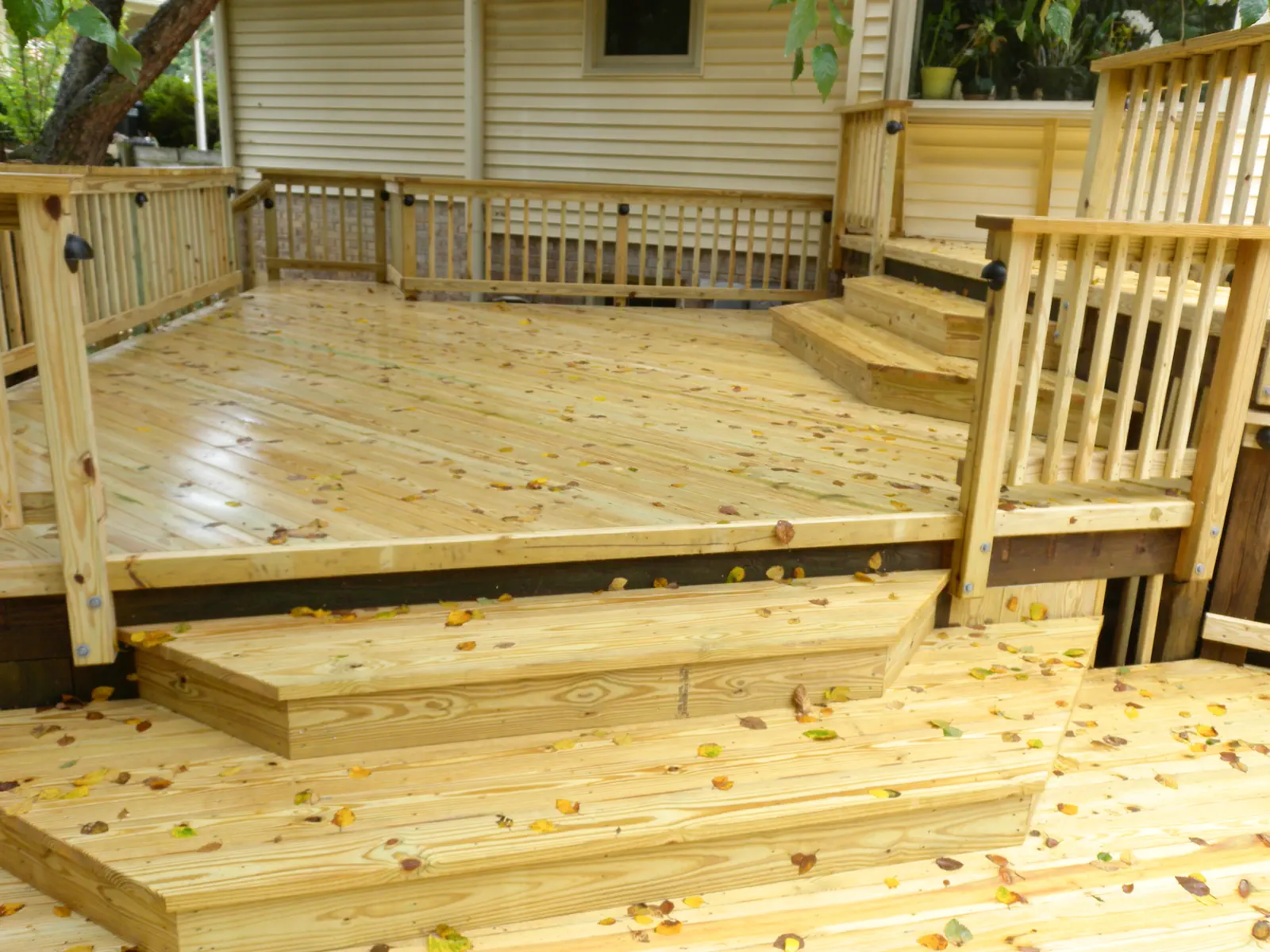
Pressure-treated pine. We'll build it if you want it, and we'll tell you first that it doesn't last, it needs constant maintenance, and it ends up costing more over its life than composite or hardwood. We steer people away from pine decking and pine railing both.

Material Summary

Lowest maintenance: Composite or PVC

Best value in real wood: Tropical hardwood, priced in line with mid-range composite

Most sustainable: Moso bamboo

Railing: Aluminum wherever possible

We steer away from: Pine decking and pine railing

What we build with

Railing costs more than you think

Railing and decking are the two most expensive line items on a deck. Framing, which is what homeowners usually expect to be the big number, is a smaller share than people think.

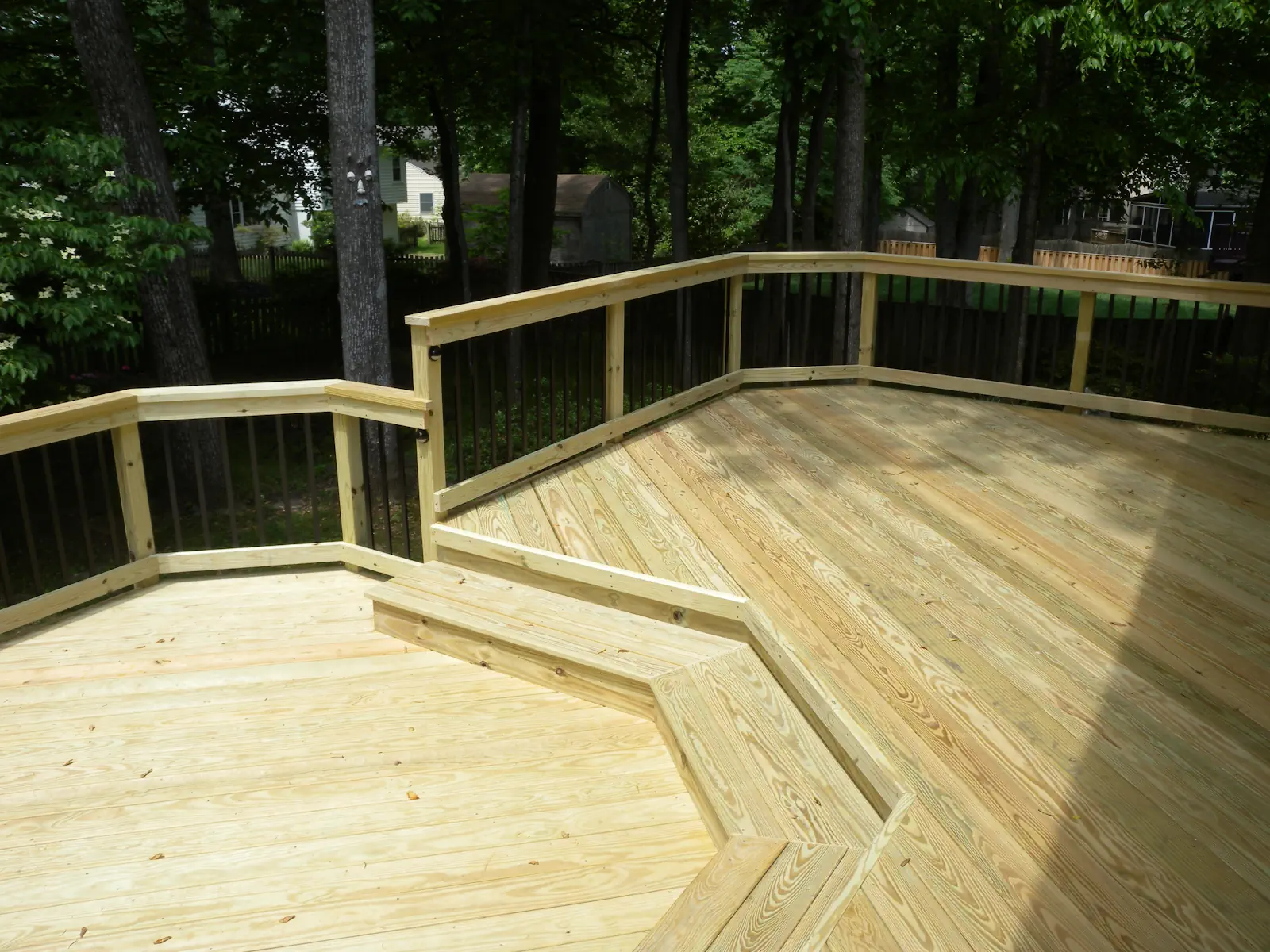
So railing is worth deciding carefully. Composite railing matches the decking and can sag noticeably within a few years; we recommend aluminum wherever possible — thin, dark, strong, and it disappears visually. Cable and glass open up a view and cost accordingly.

On the stairs, we install Paragon spiral staircases where a conventional stair would eat the yard. We also install walkable glass deck panels for decks over a lower-level living space that needs light.

Every deck we build uses Camo hidden fasteners and structural screws — no face-screwed boards.
What does a deck cost in Northern Virginia?

Why we don't publish prices

A 16-by-14 screened porch can cost $40,000. The same 16-by-14 porch can cost $120,000. Same footprint, same county, same crew. The difference is roofline, materials, railing, finish, lighting, and what the site needs.

Online price calculators and AI estimates can't see any of that. They produce a number that's confidently wrong in one direction or the other, and homeowners arrive either expecting too little or having talked themselves out of a project they could afford.

What we do instead is a design consultation at the house. A designer walks the property, understands how you want to use the space, and then builds the design to the budget you have — which usually means finding where the money matters most to you and where it doesn't. Someone who has seen the yard can put a budget to work. A calculator can't.

What actually drives cost

  • Railing and decking: the two biggest line items
  • Framing: a smaller share than most people expect
  • Pine: cheapest on day one, most expensive over the life of the deck
  • Patios: usually less than a deck, unless the site needs walls or heavy grading
  • Roofline, finish, lighting, and site conditions

Design is most of the work

The biggest mistake homeowners make is underestimating how many options they have. A contractor who spends fifteen minutes in the yard and throws out three choices is not showing you the range of what's possible, and the deck you end up with reflects that.

To Scale and Photorealistic

Our designs are drawn to scale and rendered photorealistically, so what you approve is what gets built.

Live Changes

On many projects we adjust the design with you on a video call — move a stair, change a railing, add a level — and you see the result immediately.

More Than One Direction

We talk through multiple approaches before settling on a design, including options a quick site visit would never surface.

Design Contracts

For homeowners who want the full design process before committing to construction, we offer design contracts.

Repair, rebuild, or replace?

If you have an existing deck, we start by looking at what's under it. Two things we decline: we won't resurface a deck that isn't structurally sound, and we won't install under-deck drainage or ceiling systems on a deck we didn't build, because we can't vouch for the framing it's hanging from.

1. The Ledger and Rim Joist

Where the deck attaches to the house is where most deck failures begin. Water gets behind a poorly flashed ledger into the rim joist, and we find rot in the rim on roughly 30 to 50 percent of the existing decks we open up. If the rim is rotted, the deck isn't safe to resurface.

2. The Footings

Footings here need to go at least 24 inches down to the frost line, and they have to reach hard ground, not just depth. Any footing within five feet of the house has to go down to the depth of the house footing itself.

3. The Age

A wood-framed deck lasts about 20 to 25 years, with a lot of variation for the lot, the exposure, and how it was maintained. Aluminum or steel framing lasts essentially indefinitely, which is why we recommend it on decks meant to be permanent.

4. The Load

A full hot tub weighs about as much as a Ford F-350, and a stone counter with a built-in grill concentrates serious weight over a few joists. Both need additional posts and beams. If you think you'll want one, say so at design — framing for it now costs a fraction of retrofitting later.

How we work

We've been a small company by choice since Cliff and Lisa Whitmer started it in 2004. The core crew is full-time carpenters who work for us. Around them is a small circle of specialists — electricians, gas, and a few framing and finish crews we've handpicked and worked with for years. Our most detailed builds go to them, and they're the best people we know.
Design consultation
A designer walks the property, understands how you want to use the space, and designs to the budget you have.
Design
To-scale, photorealistic drawings, adjusted with you — often live on a video call — until they're right.
Permits
We file with the county or town and manage the inspections. Where there's an HOA, we prepare the full documentation package for you to submit.
Build
At least two weeks on site for a deck, four to six for a screened porch, and about three months for a full backyard remodel. Crews arrive between 7:30 and 8:00 and work until 4:00 or 5:00, and we build year-round, including winter. Start dates depend on the season and the county's backlog, so we give you a real date at consultation.
Warranty
One year on workmanship, and most workmanship issues show up well inside that. Materials carry manufacturer warranties from ten years to lifetime. Because of our Platinum and Gold status, TimberTech and Trex cover the labor to replace defective boards for five to twelve years, not just the material.

Where we build, and how the counties differ

We build across Fairfax, Loudoun, Arlington, Prince William, and Alexandria, and file permits in each, plus the towns of Vienna and Herndon and the city of Leesburg. We don't build anything that requires a permit without one.

The counties are not the same. Fairfax is the easiest; a simple deck can clear review in about three days. Loudoun has been slow lately, two to three months in some cases, though it varies. Prince William and the City of Alexandria are the slowest by a wide margin. Arlington and Vienna are reasonable about reviewing but strict about lot coverage, which affects how big a deck you can build before you draw anything.

HOA approval is separate from the county, and it depends on your neighborhood rather than your county. Vienna, Arlington, and the City of Alexandria usually have none.

Our Outdoor Living Services

Whitmer Decks offers custom outdoor living solutions for Northern Virginia homeowners.

Decks

Custom deck design and construction for beautiful, functional outdoor living.

Screened Porches

Comfortable porch spaces designed to extend your home outdoors.

Pavilions

Covered outdoor structures that add shade, style, and usability.

Pergolas

Custom pergola installations for defined outdoor seating and dining spaces.

Patios

Expertly crafted patios that complement decks and outdoor living areas.

Outdoor Kitchens

Outdoor cooking and entertaining spaces designed around your home.

Three Season Rooms

Custom enclosures that make your outdoor space more comfortable for more of the year.

Copyright© 2026 All Rights Reserved.