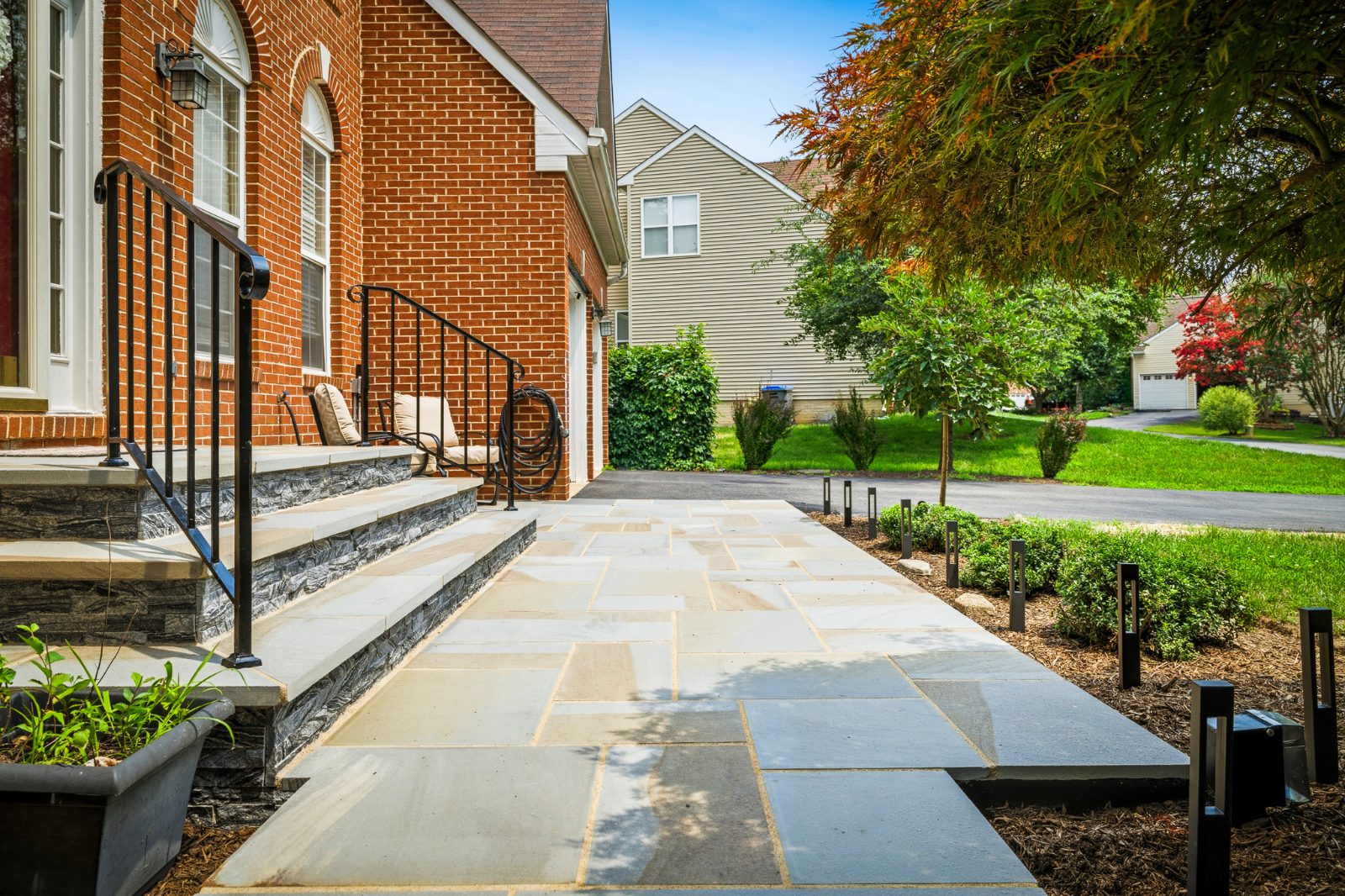
A patio becomes a place people want to be when it gives them a reason to gather. Fire pits and fireplaces add warmth and a focal point. Outdoor kitchens keep the cook part of the party. Seat walls add permanent seating without crowding the space, and retaining walls turn a sloped yard into level, usable rooms. The best patios combine a few of these, planned together from the start.
A fire pit is the most social feature you can add to a patio. People pull their chairs into a circle, the phones go away, and a short evening turns into a long one.
Fall nights in Northern Virginia are made for this. Cool enough for a fire, not cold enough to send you inside.
Gas or wood? Gas lights with a switch, burns clean, and doesn’t send smoke into anyone’s eyes or clothes. Wood gives you the crackle and the smell, but needs more clearance and more cleanup. Gas is the easier everyday choice. For some people, wood is the whole point.
Placement matters more than people expect. A fire pit needs room for chairs all the way around, a clear path to it, and enough distance from the house, trees, and any overhead structure.
An outdoor fireplace does what a fire pit can’t. It gives the patio a vertical focal point, the way a fireplace anchors a living room. It also blocks wind, screens a neighbor’s view, and gives the space a sense of enclosure that makes it feel like a room.
It’s a larger investment and a bigger design decision. The scale has to fit the house, the chimney has to be the right height, and the stone or veneer should relate to the patio and the home. Done right, it’s the feature people remember.
An outdoor kitchen keeps whoever’s cooking in the conversation instead of running back and forth through the house. It can be as simple as a built-in grill with counter space on both sides, or as complete as a grill, side burner, refrigerator, sink, and storage under a covered pavilion.
The layout is where design earns its keep. The cooking area should be close to the house for convenience, but placed so smoke drifts away from the seating and the windows. There should be landing space beside the grill and a clear separation between the cook’s zone and the guests.
A seat wall is a low wall built at seating height around the edge of a patio. It gives you permanent seating for a crowd without filling the space with extra chairs, and it defines the edge of the patio so the space feels intentional. Paired with a fire pit, a curved seat wall is hard to beat.
Seat walls can also do double duty, holding back a small change in grade while giving everyone a place to sit.
Many Northern Virginia yards slope. A retaining wall turns that slope into level ground you can actually use: a dining terrace near the house, a lawn below, a fire pit area tucked into the hillside. Walls also create the level changes that make a backyard feel like a series of rooms instead of one flat space.
Retaining walls can be built from segmental block, natural stone, or stone veneer over a concrete core. Whatever the material, the part that determines whether it lasts is behind the wall. Proper drainage, gravel backfill, and a solid footing keep water pressure from pushing the wall over time. Taller walls may need engineering and a permit.
Gas lines, electrical, water, and lighting all have to run under or through the patio. The time to plan them is during design, not after the stone is down. Even if a kitchen or fireplace is a phase-two idea, running the lines now costs very little and saves tearing up a finished patio later.
Should I choose a fire pit or an outdoor fireplace?
A fire pit is more social, since everyone sits around it, and it’s usually the smaller investment. An outdoor fireplace makes a stronger focal point, blocks wind and views, and gives the patio the feel of an outdoor room.
Is a gas or wood-burning fire pit better?
Gas is cleaner and easier: no smoke, no ash, and it lights with a switch. Wood offers the classic crackle and smell but needs more clearance and cleanup.
What do I need for an outdoor kitchen?
At minimum, a built-in grill and counter space on both sides. Many clients add a refrigerator, sink, storage, and a cover or pavilion. Each one affects the gas, electrical, and water lines, so plan them together.
Do retaining walls need a permit in Northern Virginia?
Taller retaining walls often do, and some need an engineer’s design. Requirements vary by jurisdiction, so we confirm them for each property.
The features are what turn a patio into a place you use every week. Schedule a design consultation, and we’ll design the patio around how you want to spend your evenings.