An outdoor living space is a room you use, not a backyard you visit a few times a summer. The difference is planning for how you’ll actually spend time out there: heat for cool evenings, screens for bugs and wind, a place to cook, a place to watch the game, plants that soften the hard edges, and even a spot to work. Designed together, these features stretch a Northern Virginia outdoor season well past summer, into early spring, late fall, and plenty of winter evenings.
The best outdoor spaces are organized like the inside of a house. A dining area near the kitchen. A lounge with deep seating. A cooking zone. A fire. Maybe a spot for the kids, or a quiet corner for one.
Level changes, low walls, a roof over one area and open sky over another, and planting all help define those rooms without closing them off. When every space has a clear purpose, the whole yard gets used.
Your lot shapes this too. Loudoun has a lot of large, flat lots, so the rooms can spread out side by side. In Fairfax, lots tend to be hilly and odd shaped, so the rooms usually step down the slope with walls and level changes.
Infrared heaters are one of the best upgrades you can make to a porch or covered patio. They warm people and surfaces directly rather than heating the air, so they still work with a breeze. Mounted overhead, they take the chill off a cool spring or fall evening at the flip of a switch.
Fireplaces and fire pits add heat and a focal point at the same time. A fireplace on a porch or patio becomes the center of the space, the same way it would in a living room.
Drop-down screens roll down from a header to close in a porch, pergola, or covered patio. Lower them for bugs, low afternoon sun, or wind. Raise them and they disappear into the header. They let one space be open air at noon and fully screened by dusk.
Three-season windows go a step further, with panels that close against cold and rain. They’re the reason a porch can be comfortable in March and November.
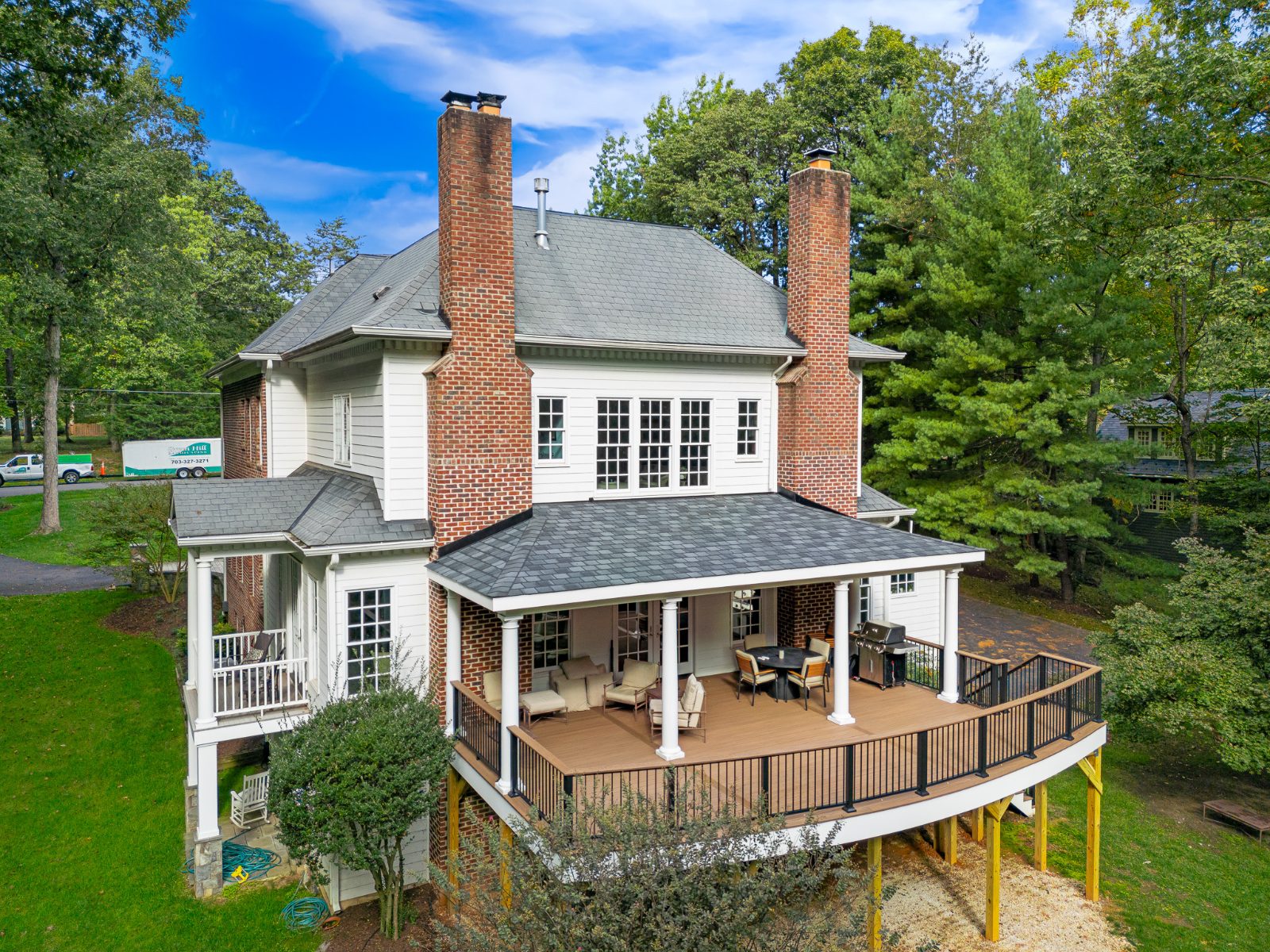
An outdoor kitchen or a dedicated grill area keeps the cook with everyone else. Even a built-in grill with counter space on both sides changes how often you cook outside. Placement is key: close enough to the house to carry things back and forth, and set so the smoke drifts away from the seating. Grills belong in the open, not under a porch roof, which is why a screened porch pairs so well with a small open deck or patio just for the grill.
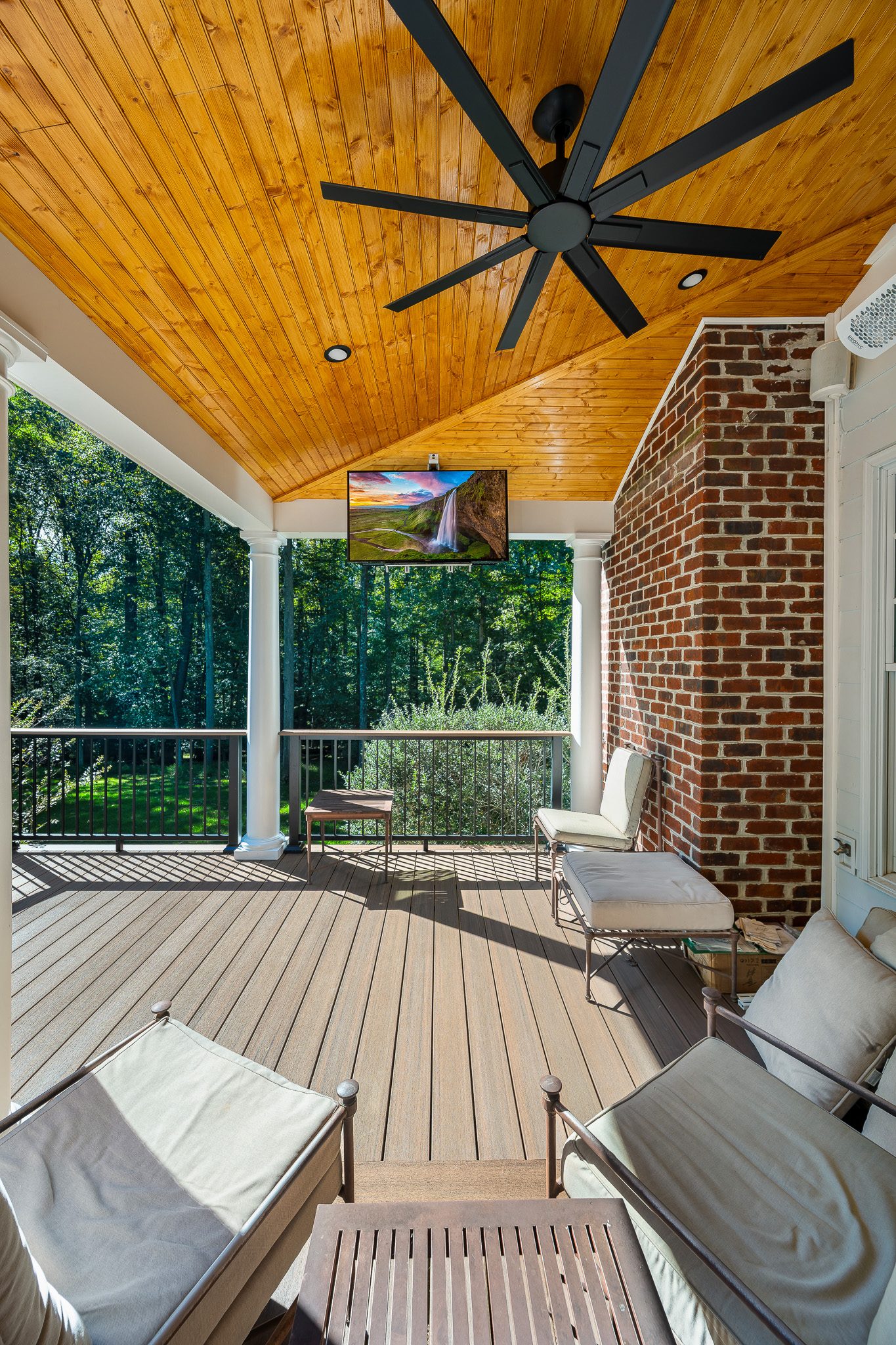
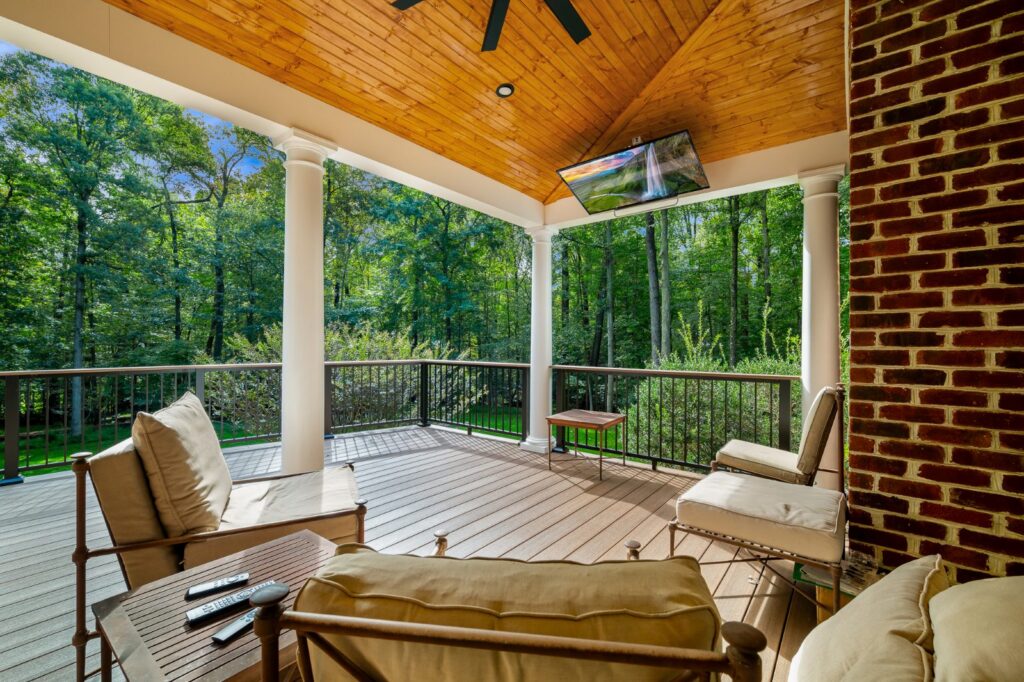
A TV wall on a porch or under a covered patio turns the space into a place to watch the game with friends. A few things make it work:
Hosting outdoors goes better with a little planning. A wide top rail or bar counter gives guests a place to set a drink. Lighting on dimmers lets the space shift from dinner to late evening. Outlets where you’ll need them keep extension cords out of the walkway. And a layout with room to move means people mingle instead of crowding the door.
If you work from home some days, there’s no reason all of it has to happen inside. A covered porch can be a great workspace with a few additions: outlets at table height, shade and glare control for screens, comfortable seating, and a strong Wi-Fi signal. An outdoor access point, planned during design, solves the signal problem for good.
Plants are what make hardscape and decking feel like part of the landscape. Planting beds soften the edges of a patio. Trees and tall grasses add shade and privacy. An herb garden near the grill is a small touch people use every week.
Built-in planters, set into a deck, a seat wall, or the top of a retaining wall, make plants part of the architecture. They need proper drainage and liners so water never sits against the deck framing or the wall.
Not everything has to happen at once. But gas lines, electrical, water, and conduit for future features should be planned from the start. Running a line now for a future kitchen or heater costs very little. Adding it after the patio and porch are finished costs a lot.
How can I use my outdoor space in colder months?
Combine heat and enclosure. Overhead infrared heaters, a fireplace or fire pit, and drop-down screens or three-season windows can make a porch or covered patio comfortable on many cool evenings.
Do infrared heaters work outdoors?
Yes. Infrared heaters warm people and surfaces directly instead of heating the air, so they stay effective in open-air spaces and light wind.
What is a drop-down screen?
A retractable screen that rolls down from a header to enclose a porch, pergola, or covered patio, then retracts out of sight when it isn’t needed.
Can you put a TV outside?
Yes. Use an outdoor-rated TV or place it well under cover, face it away from the afternoon sun, and plan power and conduit during design.
Schedule a design consultation, and we’ll design a space around how you want to live outside, in every season.