The railing is the most visible part of almost every deck. You see it from the kitchen, the family room, the yard, and often the street. You only see the decking when you’re standing on it. That’s why we treat the railing as the most important design decision on a deck, and why it deserves more thought than it usually gets.
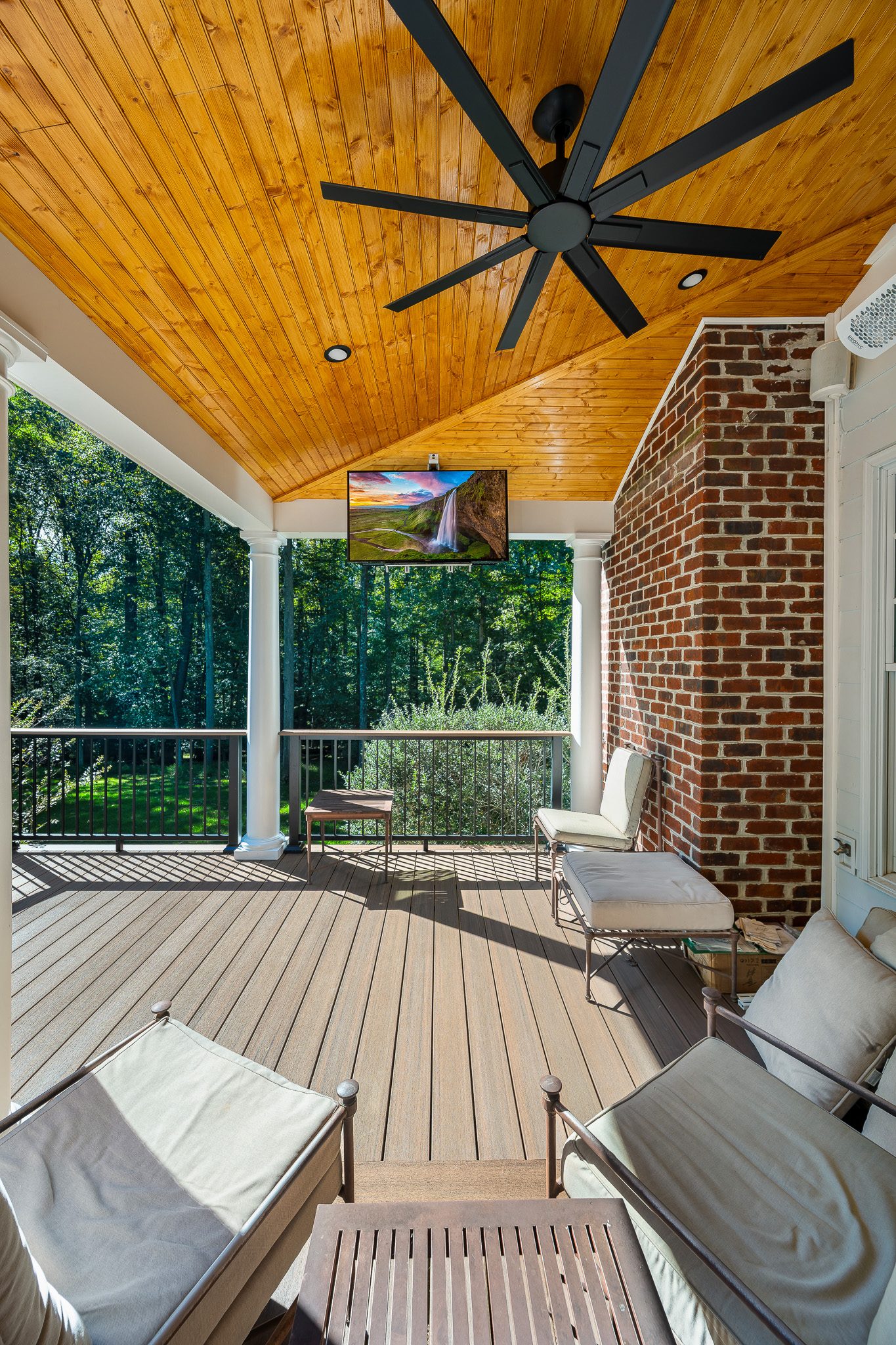
Think about where you actually look at your deck from. Mostly from inside, through the windows, at eye level. From there, the railing fills the view. A heavy, busy railing puts a fence between you and your yard. A well-chosen one frames the yard the way a good window frame does.
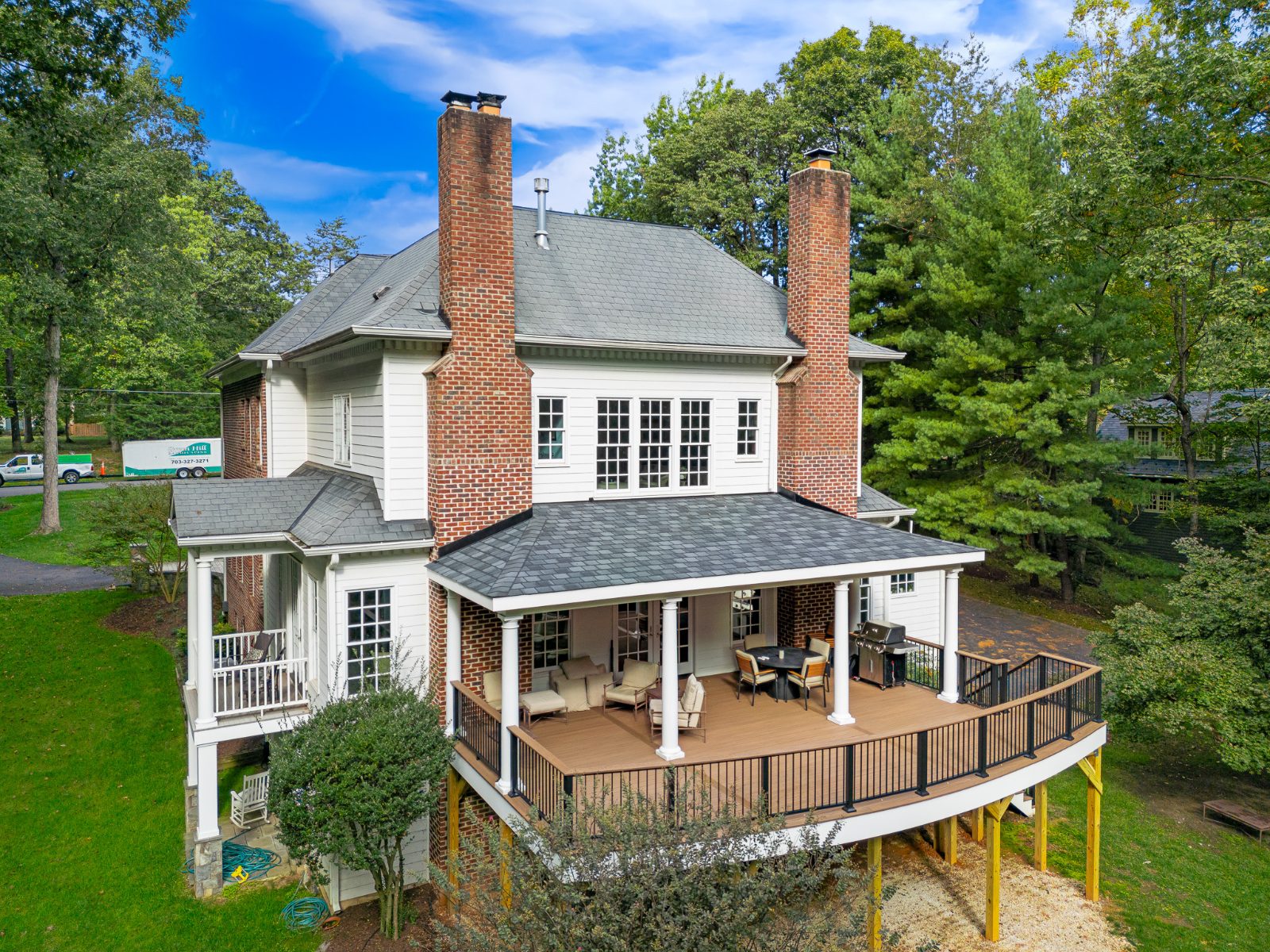
The railing also sets the style of the whole project. Put a chunky white railing on a deck and it reads traditional. Put slim black aluminum on the same deck and it reads clean and modern. Same boards, same footprint, completely different result.
Aluminum is the railing we specify most on our higher-end projects. The balusters and posts are slim, so you look past them instead of at them. It doesn’t rot, warp, or need paint, and a powder-coated finish holds up for decades with an occasional rinse. Black aluminum works with almost any decking color and house style.
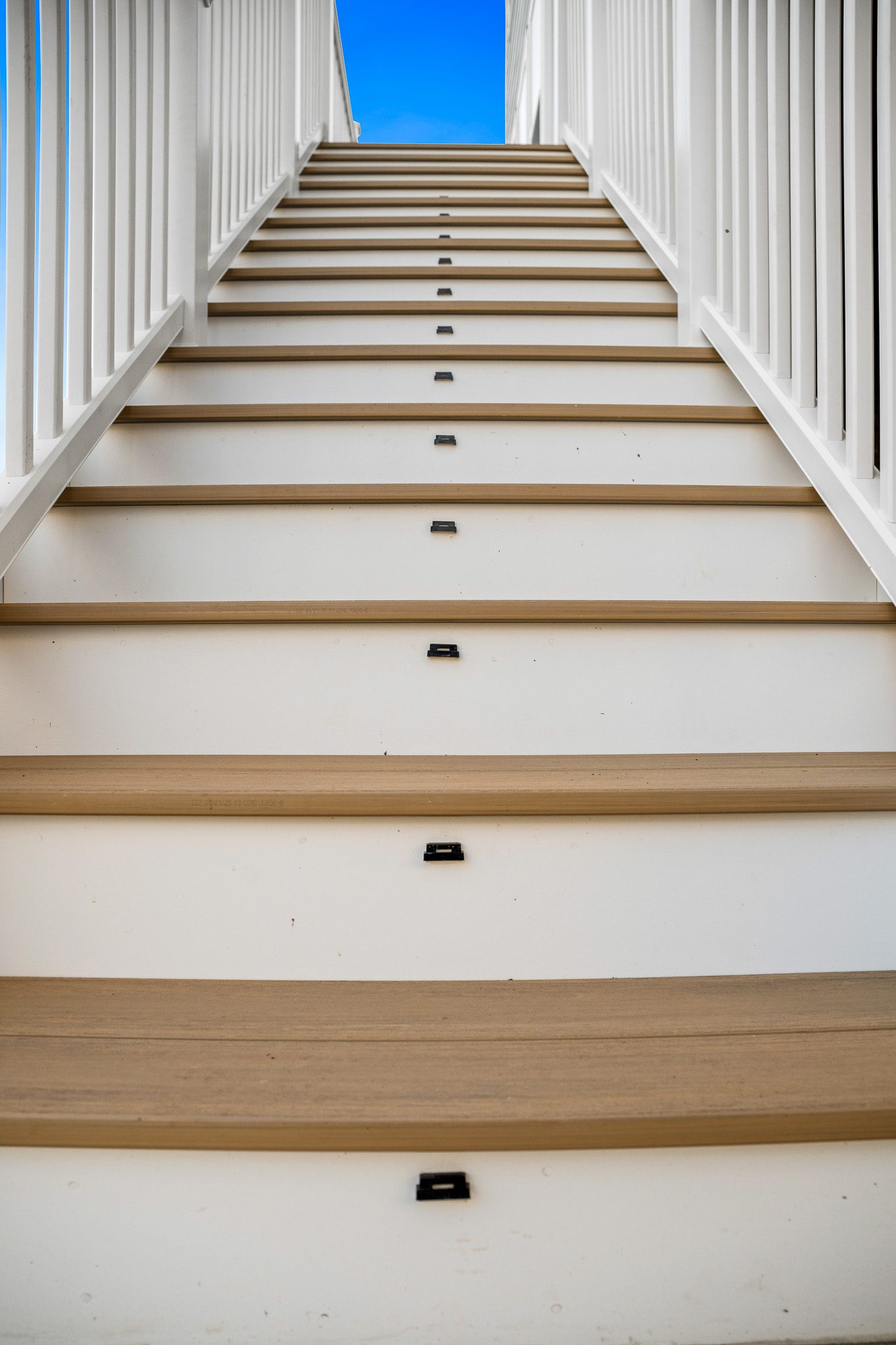
Composite and vinyl railings are made to coordinate with composite decking. They have thicker, more traditional profiles. White was the standard for years, and it’s fading in favor of darker, more neutral colors.
Wood can be shaped and detailed in ways other materials can’t, and nothing matches its warmth. It also asks the most of you. Expect to stain or paint it regularly to keep it looking good.
Stainless steel cable runs horizontally between posts and nearly disappears. If the view is the whole point, cable is hard to beat. It needs strong posts, precise tensioning, and occasional re-tightening.
Glass panels give you the most open view of all. They’re a premium choice and need regular cleaning to stay clear, especially under trees.
Where you live changes the answer, too. Out in Purcellville, on decks looking down the mountain, we like a horizontal rod rail. In Oakton, where a lot of yards back up to woods, vertical balusters or cable rails blend in with the trees.
Black recedes. It frames the view, hides pollen and dirt, and works with warm brown decking, stone, brick, and painted siding alike. White does the opposite, pulling attention to the railing and showing every bit of grime. Some traditional homes still call for white, but most of our clients are choosing black, and we expect that to last.
A wide top rail. A flat cap wide enough to hold a drink turns the railing into a place to lean and talk.
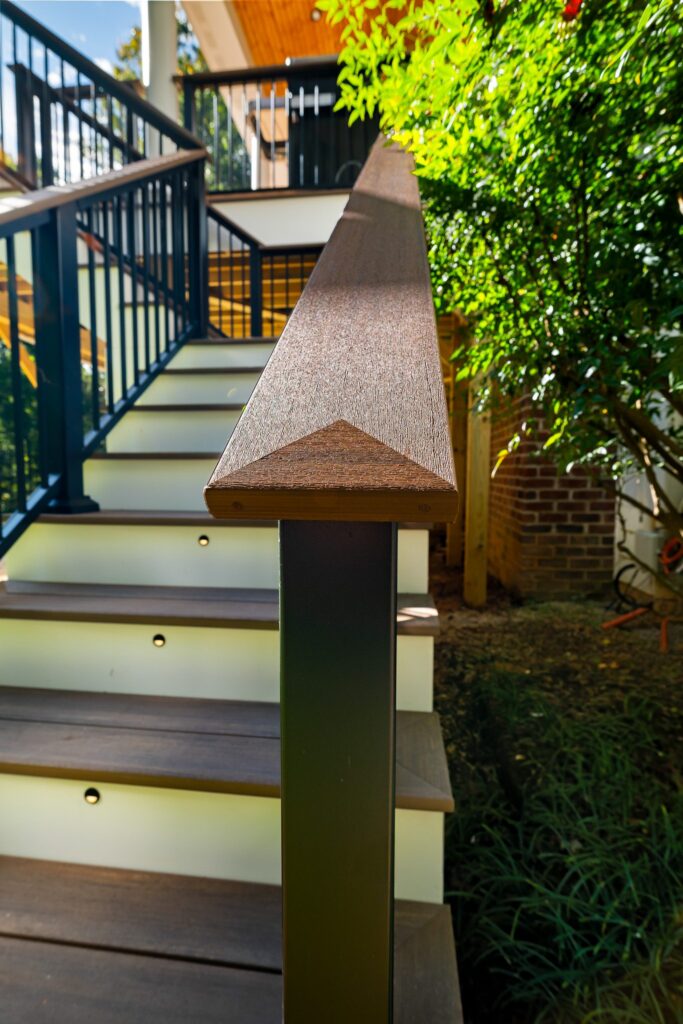
Mixed materials. Black aluminum balusters with a wood or warm-toned composite top rail add warmth where your hands go.
Lighting. Soft lights tucked under the top rail or into the posts light the deck without glare.
Careful layout. Posts spaced evenly and placed deliberately at corners, stairs, and openings, so nothing looks like it landed where it happened to.
Stair rails that flow. Stair railings that match the deck railing’s lines, so the whole thing reads as one piece.
In Virginia, a deck surface more than 30 inches above grade needs a guard. For most homes, that guard has to be at least 36 inches tall, with openings small enough that a 4 inch sphere can’t pass through. Stairs have their own handrail rules. We design to code from the start, so the railing you approve in the design is the railing that passes inspection.
What is the best railing for a deck?
For most high-end decks, aluminum. It’s slim, strong, and low maintenance, and it comes in colors like black that suit almost any home.
What color deck railing is most popular?
Black. It frames the view, hides dirt, and pairs with nearly every decking color. White railings are becoming less common.
How tall does a deck railing need to be in Virginia?
For most homes, guards must be at least 36 inches high when the deck surface is more than 30 inches above grade. Your local building department has the final word.
Is cable railing worth it?
If the view is the main reason for the deck, it can be. It needs careful installation and occasional re-tensioning.
It’s the first thing people see and the last thing they forget. Tell us about your project, and we’ll design a railing that frames your view instead of fencing it in.