Trex and TimberTech both make excellent decking, and we build with both. Neither one is better across the board. The real differences come down to material, look, and feel. Trex’s lineup is built mostly around capped composite. TimberTech offers two families: capped composite and capped PVC, sold under its AZEK name. The right choice usually depends on which boards you like best in person and whether composite or PVC suits how you’ll use the deck.
Trex helped create the composite decking category, and it’s local, based right up the road in Winchester. Its boards are made largely from recycled materials, combining reclaimed wood fiber and recycled plastic under a protective outer shell. Trex offers collections from entry level to premium, with a broad color range and a solid, substantial feel underfoot. If you want a classic composite deck with a lot of color options, Trex is a great place to start.
TimberTech is close by too, a stone’s throw away in Ohio. It gives you a choice of two materials. Its capped composite collections, like PRO and EDGE, have a wood-fiber core wrapped in a protective cap. Its AZEK collections are capped PVC, with no wood fiber at all.
The PVC boards are lighter, tend to stay cooler in the sun, and have some of the most realistic wood-grain looks available in a low-maintenance board. If you’re drawn to that look, or you want the specific performance of PVC, TimberTech gives you that option within one brand.
More than the brand, the material is what changes how a deck performs.
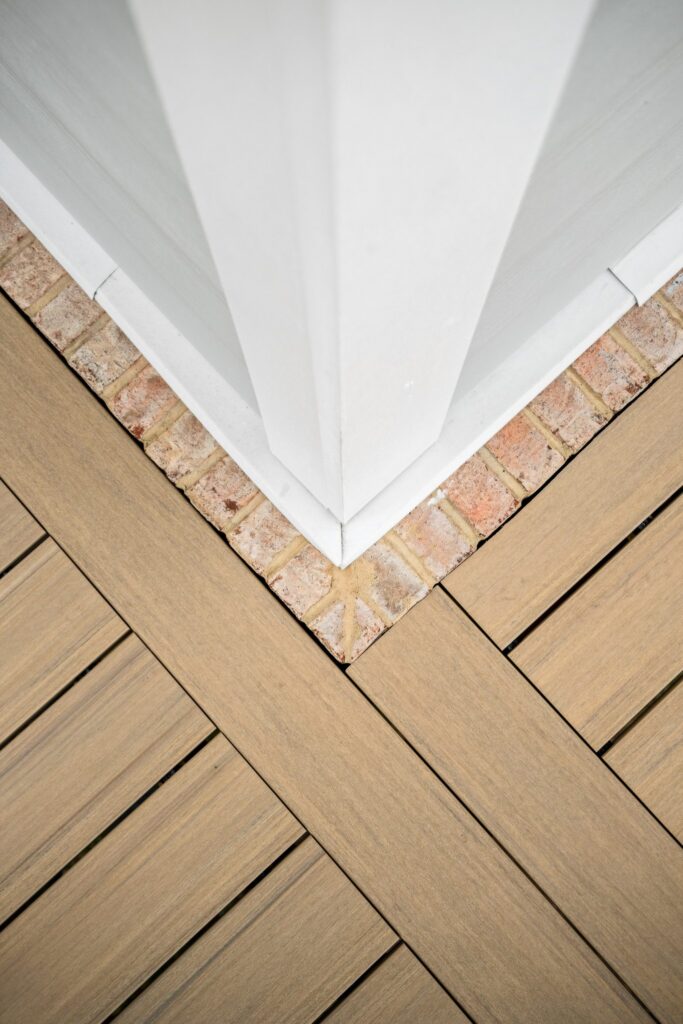
Capped composite combines wood fiber and plastic in the core with a durable cap on the surface. It feels solid and substantial, and it’s typically the more economical of the two.
Capped PVC is entirely synthetic. It’s lighter, tends to run cooler underfoot, and is especially resistant to moisture. It’s usually the higher investment.
Both resist stains, fading, and mold far better than wood, and neither needs staining or sealing.
All decking warms up in direct sun. The color you choose has more effect on surface temperature than the brand does. Lighter boards stay noticeably cooler than dark ones. If your deck faces south or west with no shade, that’s worth factoring in, and it’s one reason PVC is popular on sunny decks.
Both brands offer the warm, neutral browns that are replacing grey, so you won’t be limited on style either way.
| Trex | TimberTech | |
|---|---|---|
| Materials | Mostly capped composite | Capped composite and capped PVC (AZEK) |
| Known for | Recycled content, wide color range, Virginia roots | Two material families, realistic PVC wood grain |
| Feel underfoot | Solid, substantial | Composite: solid. PVC: lighter, cooler |
| A great fit if | You want a classic composite deck with lots of color choice | You want PVC, or a specific TimberTech look |
Small samples are hard to judge. We encourage clients to look at full-length boards in daylight, set them next to the house, and stand on them on a sunny day if possible. Seeing the color against your siding or brick usually makes the decision for you.
Warranties are long on both brands and vary by collection, so we walk through the specific coverage on the boards you’re considering.
Is Trex or TimberTech better?
Neither is better across the board. Both make high-quality, low-maintenance decking. The best choice depends on the look you prefer and whether you want composite or PVC.
What’s the difference between composite and PVC decking?
Composite decking has a core of wood fiber and plastic under a protective cap. PVC decking is fully synthetic, lighter, and tends to stay cooler and resist moisture especially well.
Which decking stays coolest in the sun?
Color has the biggest effect, so lighter boards stay cooler than darker ones. Between materials, capped PVC tends to run cooler than capped composite.
Do Trex and TimberTech come in brown?
Yes. Both offer a range of warm, neutral browns, which are replacing grey as the most requested deck colors.
Tell us about your project, and we’ll help you compare the options side by side on your own home.