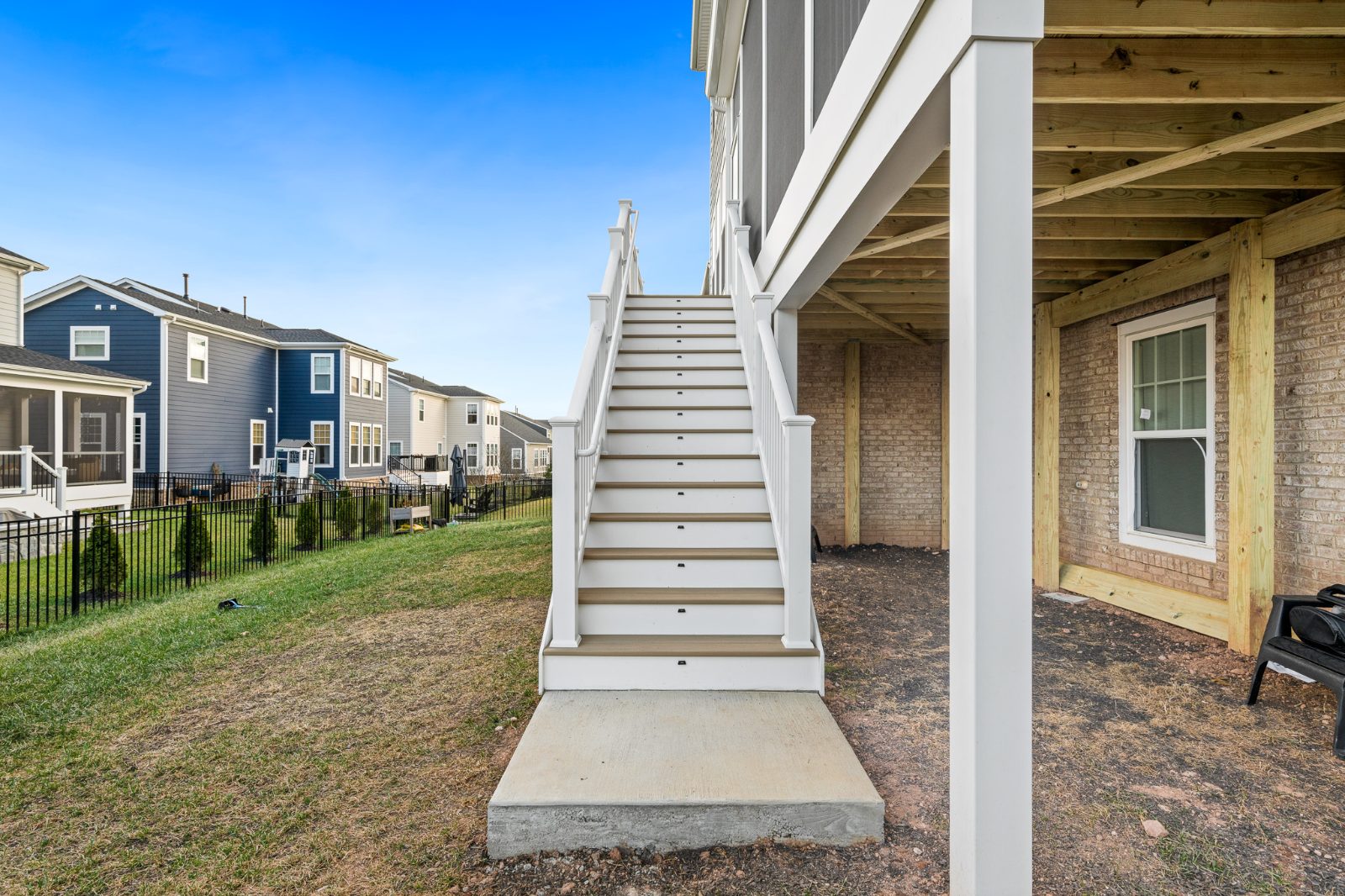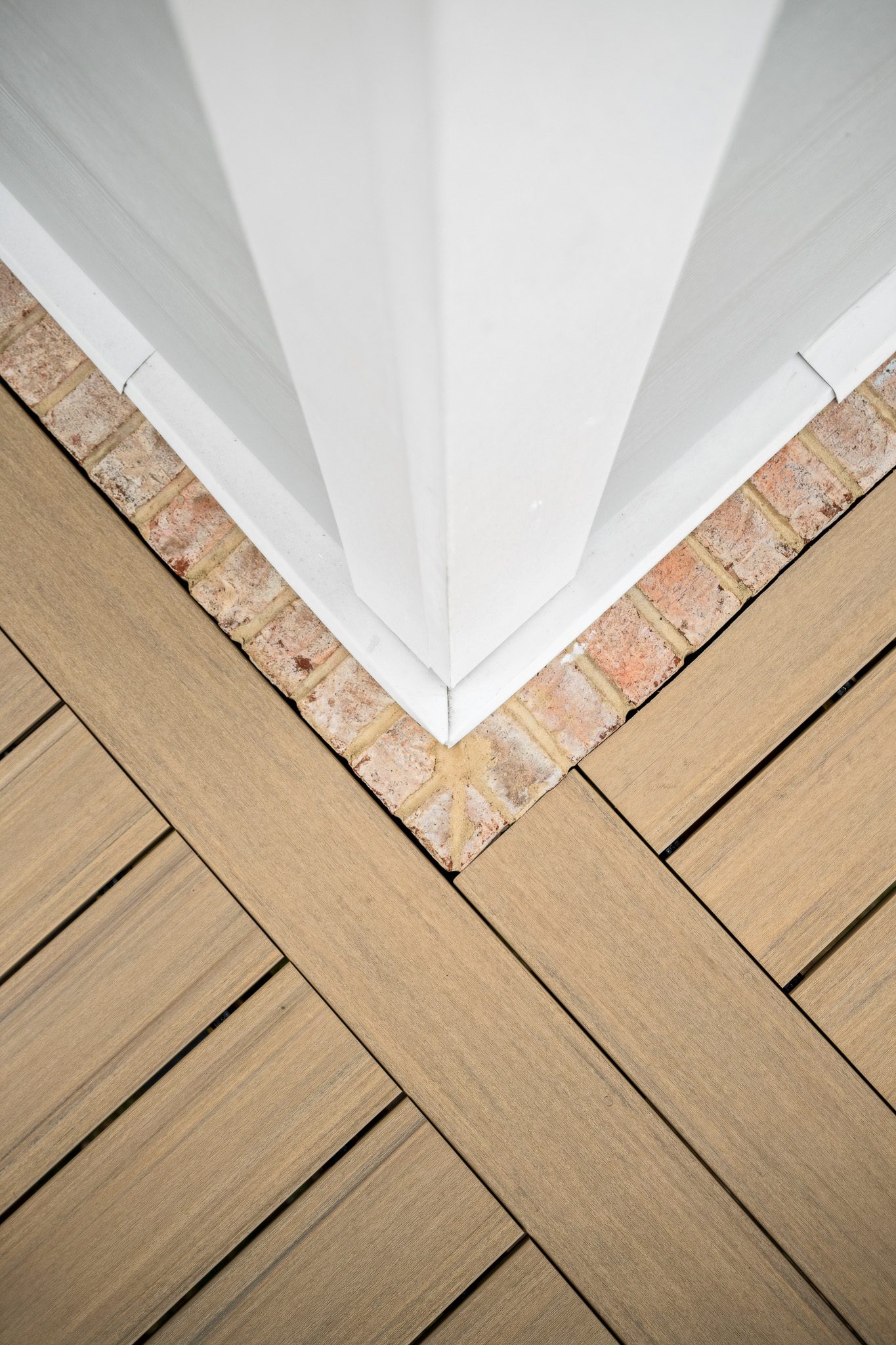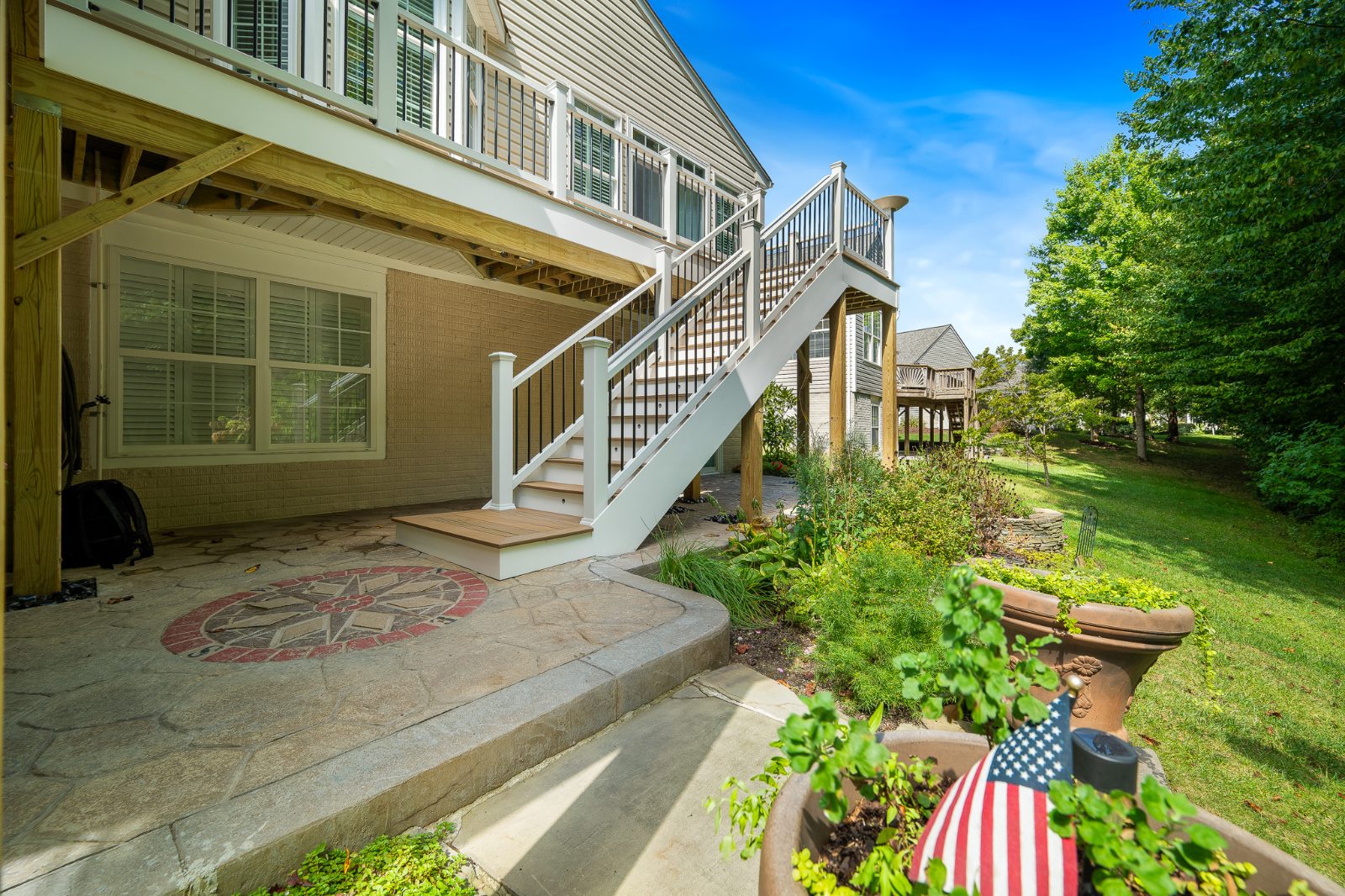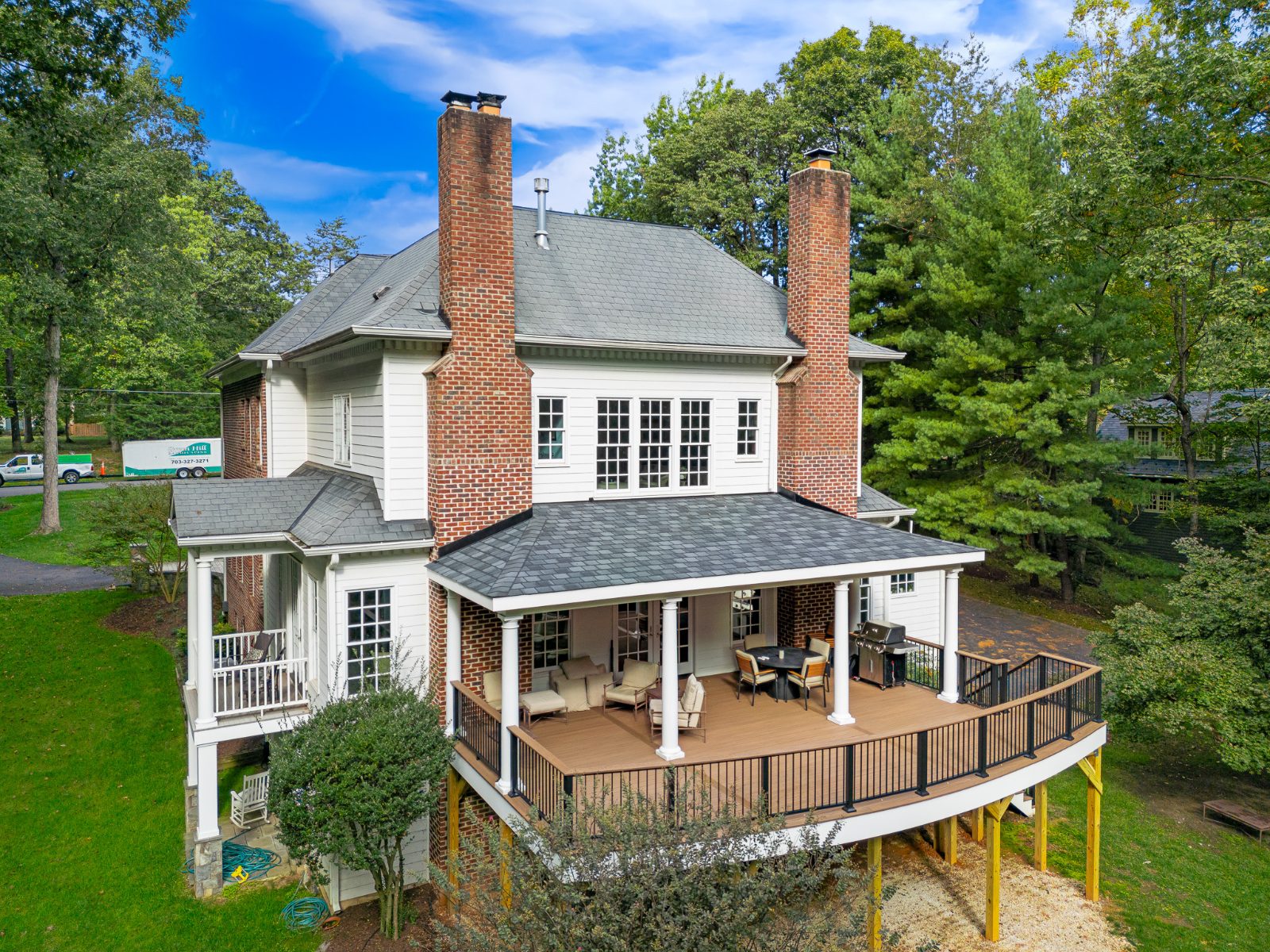
Repair your deck if the framing underneath is sound and the problems are on the surface: worn boards, loose railings, or a few soft spots. Replace it if the footings, posts, beams, joists, or the ledger that attaches the deck to the house are rotting, rusting, or moving. Resurfacing, which means new boards and railing on the existing framing, is a good middle path only when that framing is solid and will last as long as the new boards.
The hard part is that the parts that decide the answer are underneath, where most people never look. Here’s what to check.
These are usually repairable on their own, as long as the structure underneath is sound:
These are more serious and often mean the deck needs to be rebuilt:
If you see any of these, stay off the affected area and have the structure looked at before anyone uses it.
Pressure-treated framing on a well-built deck can last a long time, but many decks in Northern Virginia were built decades ago, before current requirements for footing depth, ledger attachment, flashing, and connectors. If the framing is 20 to 25 years old or more and was never updated, it often makes sense to plan for a new structure, even if the boards on top still look acceptable.
If the work involves the structure, such as footings, posts, joists, or the ledger, plan on a building permit. We cover what each county requires in do you need a permit for a deck in Fairfax County?
Resurfacing means removing the old decking and railing and installing new ones, often composite, on the existing framing. It can cost roughly half to two-thirds of a full replacement and avoids rebuilding a structure that’s still good. It works when:
The catch is lifespan. New composite boards can last decades. If the framing underneath has only a few years left, you’ll be tearing up good boards to fix it. When we resurface a deck, we check every joist, add joists where the spacing is too wide, replace any damaged framing, and protect the tops of the joists before the new boards go down.
A full replacement is also the chance to rethink the space: wider stairs, a better flow from the kitchen, a second level, built-in lighting, or a railing that frames the view instead of blocking it. Our post on custom decks in Northern Virginia covers what goes into designing one well, and how much a deck costs in Northern Virginia covers the investment.
On a dry day, walk the deck and look underneath with a flashlight. Press a screwdriver into the posts near the ground, the ends of the joists, and the ledger. Wood that’s sound will resist. Wood that’s soft or crumbles needs attention. Look for rust on hangers and bolts, and check whether there’s metal flashing over the ledger where it meets the house. This won’t replace a professional assessment, but it tells you whether you’re likely looking at a repair or a rebuild.
How long does a wood deck last?
A well-built pressure-treated deck can last 20 to 25 years or more with regular maintenance. The boards and railing usually wear out first. The framing lasts longer if it’s kept dry and was built with the right connectors.
Can you put composite decking on an old wood frame?
Yes, if the frame is sound, properly attached to the house, and the joists are spaced closely enough for the composite. Many older decks need added joists or framing repairs first.
Is it cheaper to repair or replace a deck?
Repairs cost less up front. But if the structure is failing, repeated repairs can cost more over time than replacing it once, and they don’t fix the underlying problem.
What’s the most important part of a deck to inspect?
The ledger, where the deck attaches to the house. A ledger without proper flashing and structural fasteners is one of the most common causes of serious deck failures.
Schedule a design consultation. We’ll look at the deck’s structure with you, tell you honestly whether it’s a repair, a resurface, or a rebuild, and show you what a new design could look like.