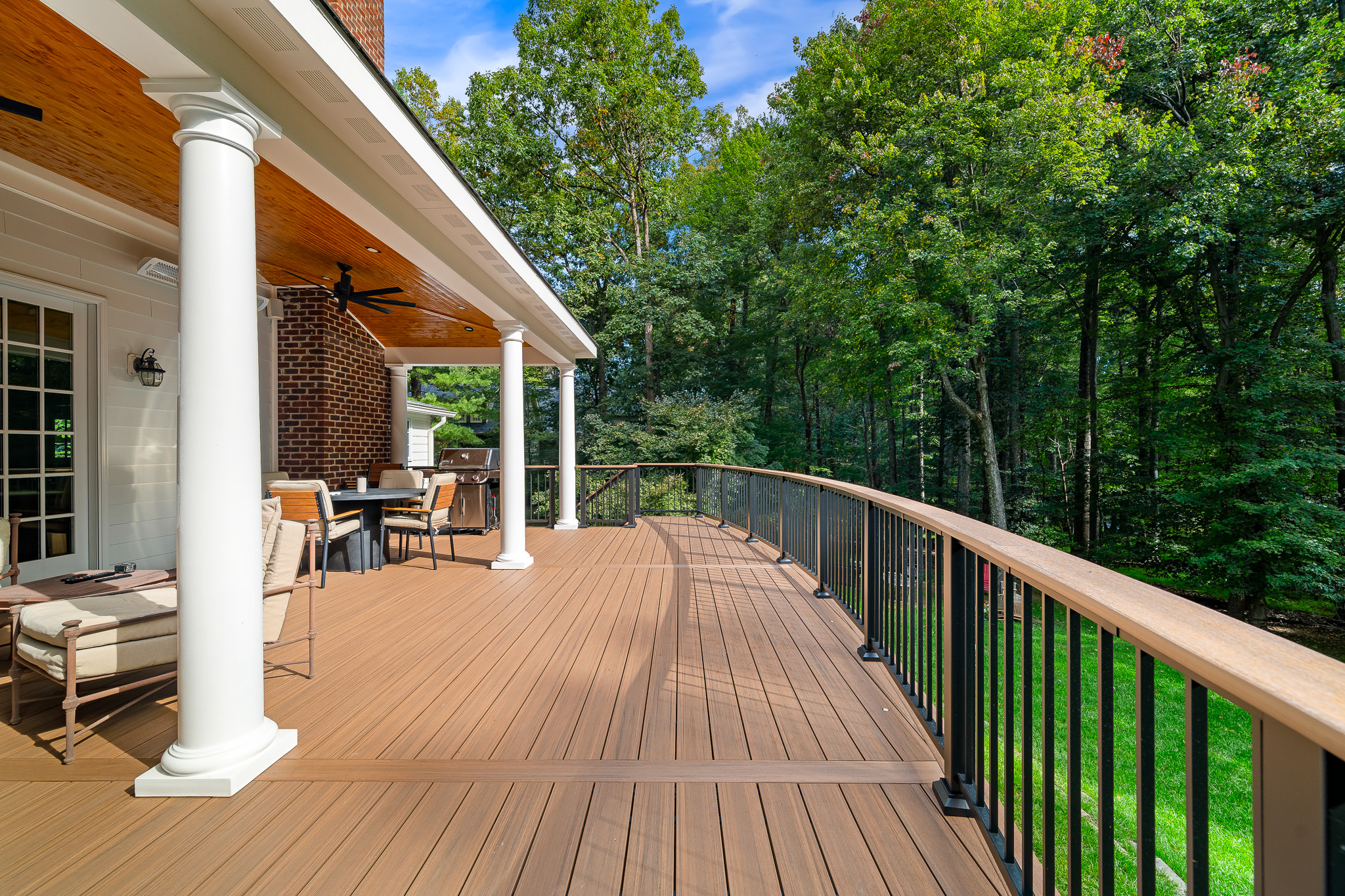
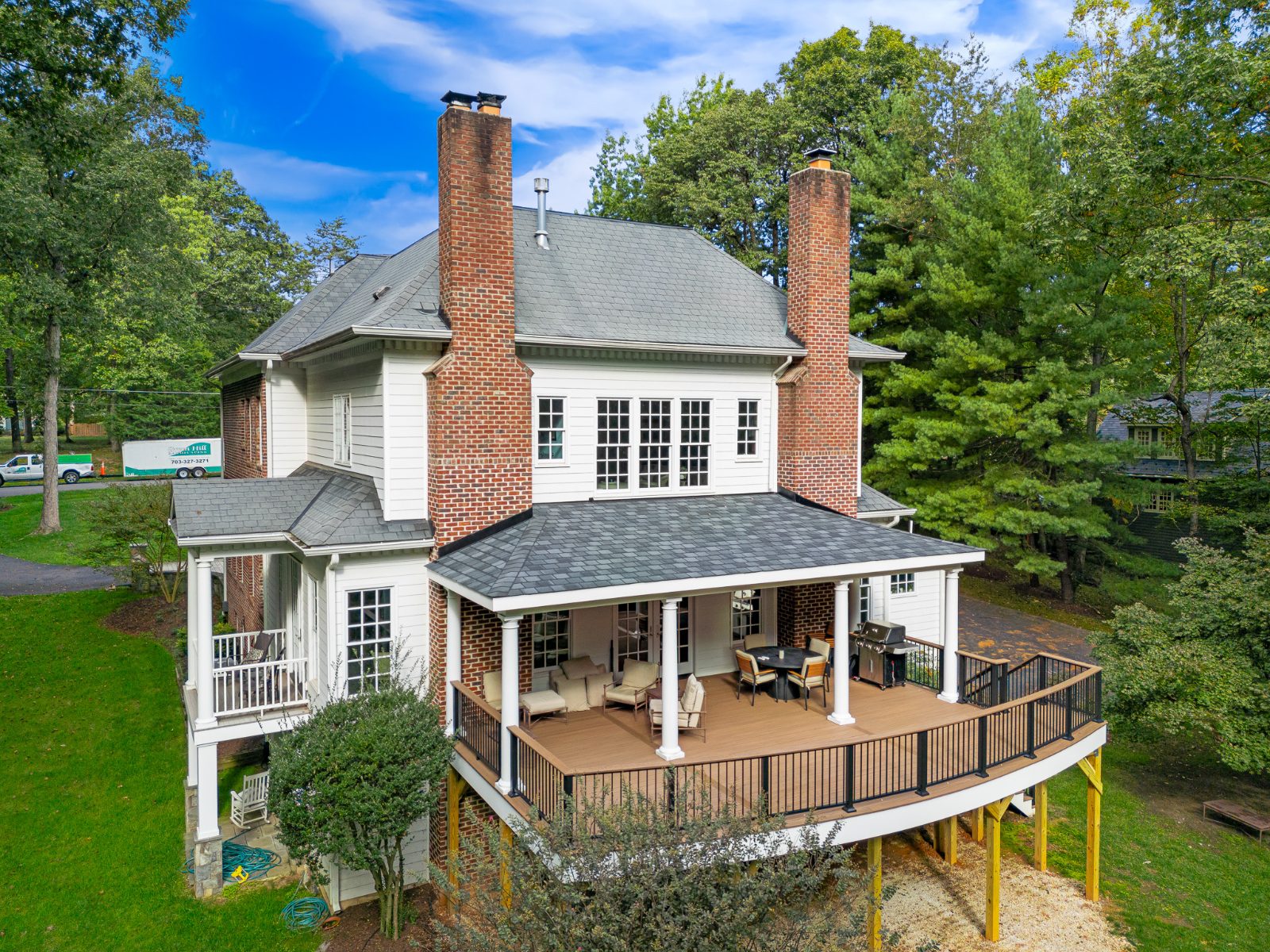
The biggest shift we’re seeing heading into 2027 is a move toward warm, natural colors and away from the grey decking that dominated the last ten years. Close behind it are black aluminum railings, porches that mix wood with low-maintenance materials, and lighting that’s built into the structure instead of added at the end. None of these feel like fads to us. They’re choices that will still look right in fifteen years.
For about a decade, grey was the default. Almost every composite line led with it, and a lot of decks around Northern Virginia went in some shade of it. It’s starting to look dated, the same way grey kitchen floors do now.
What’s replacing it are neutral browns, from light sandy tones to deep walnut. They work with almost any house. Brick, painted siding, stone. A warm brown deck sits comfortably next to all of it, and it makes a backyard feel like part of the landscape instead of something set on top of it.
We’re also seeing a lot of sage, cream, and tan houses popping up around Northern Virginia. Warm browns look right next to all three. Grey tends to fight with them.
Black is the other color that’s here to stay, mostly in railings, posts, and metal details. Black and warm brown together are about as close to timeless as outdoor materials get.
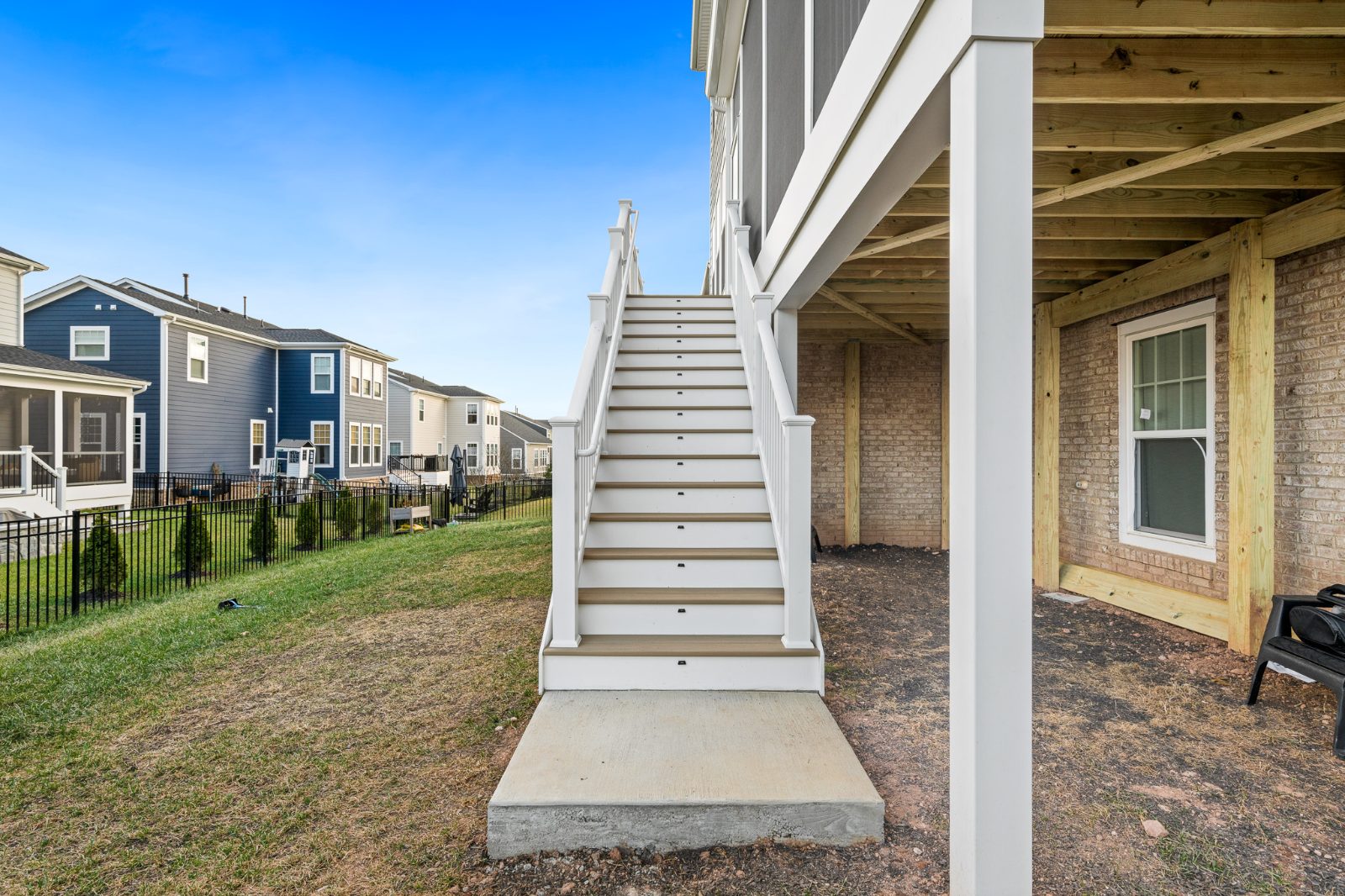
White vinyl and composite railings were standard for a long time. We’re specifying them less and less. White pulls your eye to the railing itself, and it shows dirt, pollen, and mildew more than darker colors do. Black does the opposite. It recedes, frames the view, and stays clean looking with very little effort.
There are still houses where white is the right call, like a traditional farmhouse porch with white columns and trim. For most of the projects we design, though, black is where people land.
On our higher-end projects, aluminum has become the default. The profiles are slimmer than wood or composite, so you see more of the yard and less of the railing. It doesn’t rot, warp, or need paint. Black aluminum in particular works with nearly every decking color and house style we see.
We think the railing is the most important design decision on a deck, and we wrote a full post on why. Short version: you see the railing from the kitchen, from the yard, and from the street. You only see the decking when you’re standing on it.
The best porches we’re building right now don’t use one material for everything. A combination we use often:
Every material goes where it performs best. The result looks custom because it is. It also holds up, because nothing is being asked to do a job it isn’t suited for.
Lighting used to mean a few post cap lights at the end of a job. Now it’s part of the design from the first sketch. The three details we get asked about most:
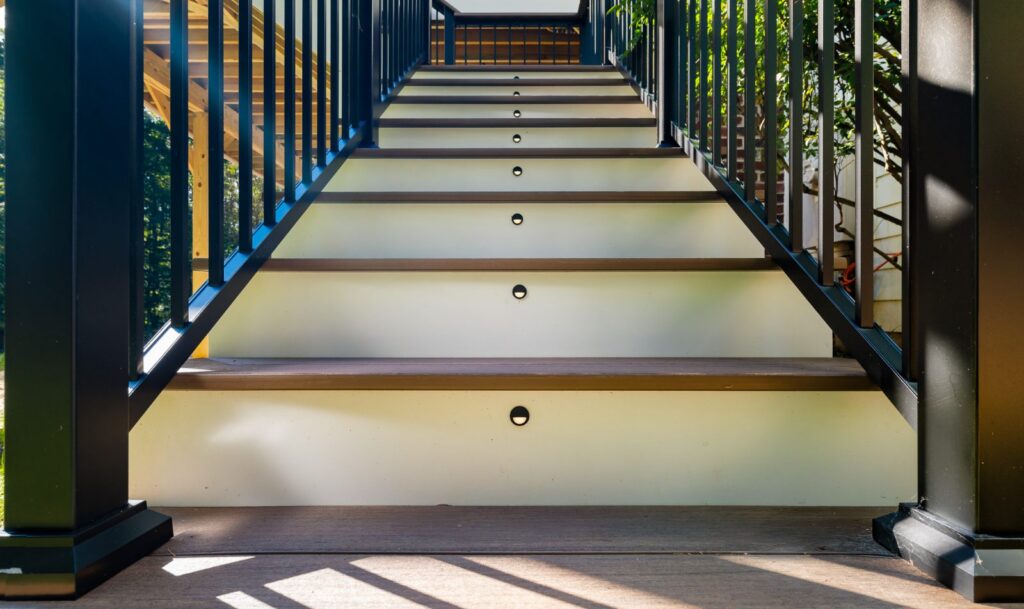
Flush lights in the decking. Small fixtures set into the deck boards, usually along stairs and edges. They mark the path without throwing glare.
Railing lights. Soft light tucked under the top rail or into the posts. It lights the deck and keeps the view into the yard dark, which is what you want at night.
Strip lights. LED strips hidden under stair treads, along a bench, or beneath a bar top. Done right, you see the glow and never the source.
The key is planning it early. Wire is easy to run while the framing is open and a lot harder to add once the boards are down.
Every trend on this list points the same way. Fewer things that need attention, colors that sit naturally in the landscape, and details that feel intentional. That’s what makes a space feel high end. It’s rarely about adding more. It’s about choosing well.
What color decking is most popular for 2027?
Warm, neutral browns are leading, from light sandy tones to deep walnut. Grey, which was the default for most of the last decade, is fading.
Are black railings better than white railings?
For most homes, yes. Black frames the view instead of blocking it, hides dirt and pollen, and pairs with almost any decking color. White still suits some traditional porches.
Is aluminum railing worth it?
For a high-end deck or porch, usually. Aluminum has a slimmer profile than wood or composite, won’t rot or need paint, and lasts for decades with little more than an occasional rinse.
When should deck lighting be planned?
During design, before construction starts. Running wire while the framing is open is simple. Adding it after the deck is finished usually means pulling boards.
We’ve been designing and building outdoor spaces across Northern Virginia since 2004. If you’re thinking about a deck, porch, or patio for next season, winter is the right time to start the design. Schedule a design consultation and we’ll walk through what will work for your home.