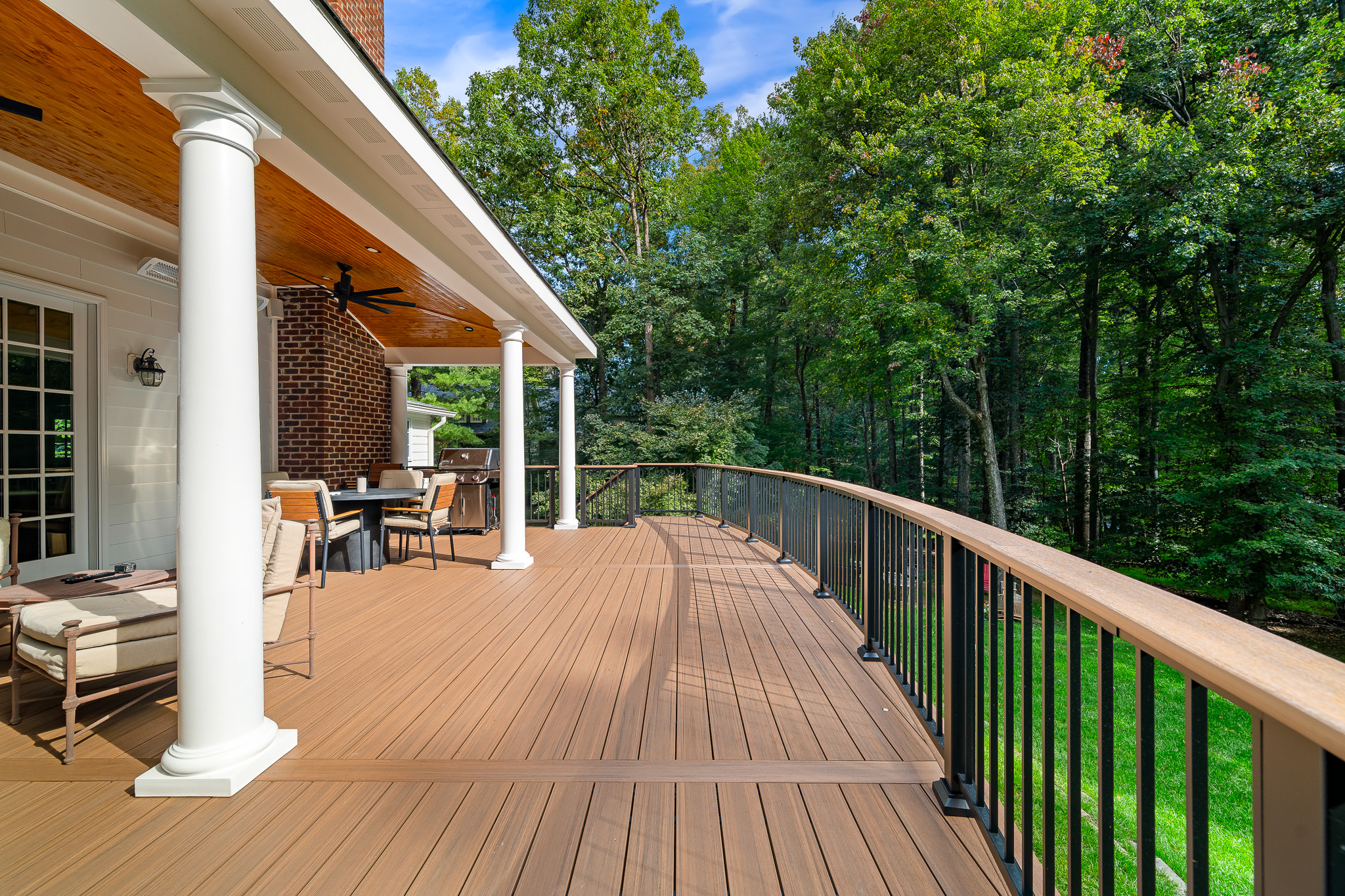
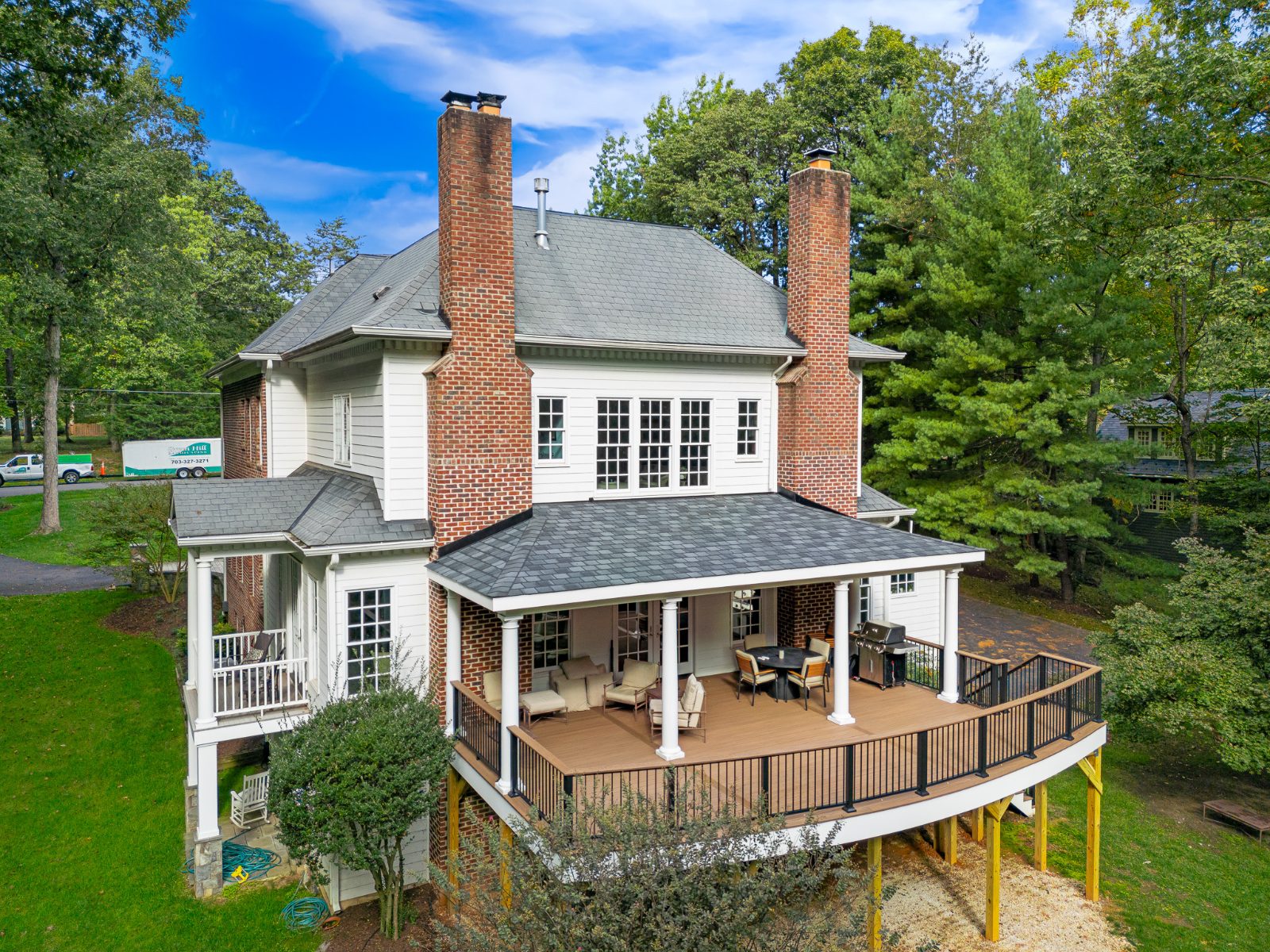
Use vertical railing when the deck looks out into trees and the house is tall, craftsman, board and batten, or shake. Use horizontal railing when the view is open and level, like a flat yard, a lake, or a long view to the mountains, and when the house is low and wide, brick, or clad in wide lap siding. The railing should run the same direction as what’s around it. When the view and the house disagree, the view usually wins, because that’s what you look at from inside. If young kids will be on the deck, factor in that horizontal rails are easier to climb.
Stand at the window you look out of most and look past the deck. What you see out there should drive the direction of the railing more than anything else.
Trees and woods: vertical. A wooded view is already made of vertical lines. Vertical balusters line up with the trunks and fade into them. Horizontal rails cut across the trees and pull your eye to the railing instead. In Oakton, where a lot of yards back up to woods, vertical is usually where we land.
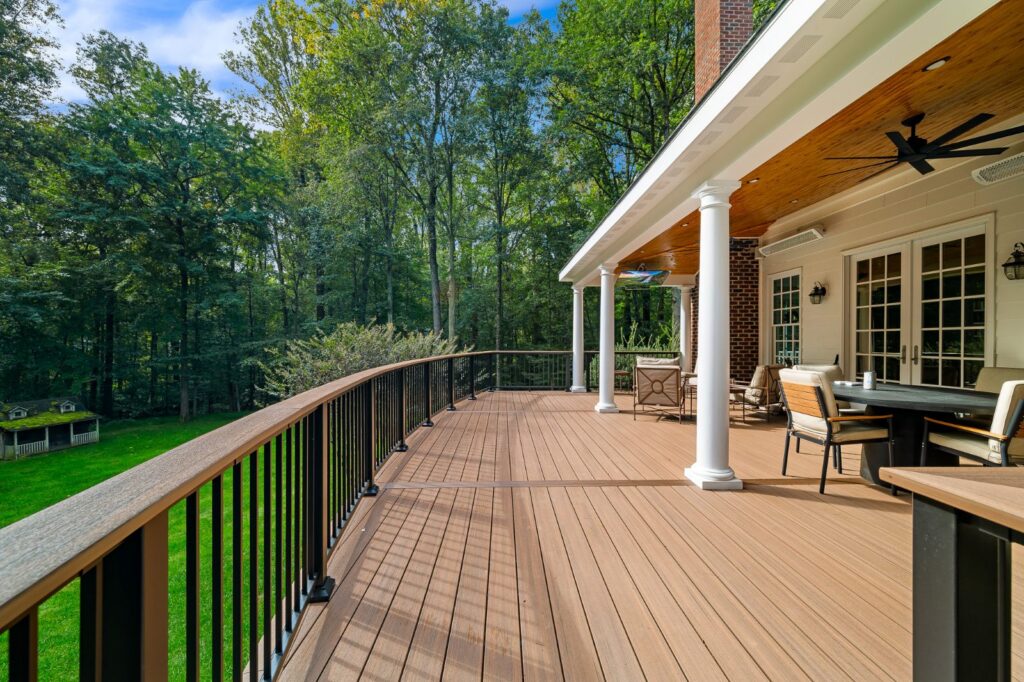
Open views: horizontal. A flat lawn, a lake, a golf course, or a long look out to the mountains is a horizontal view. Horizontal rails run with the horizon instead of chopping it into strips. Out in Purcellville, on decks that look down the mountain, we like a horizontal rod rail.
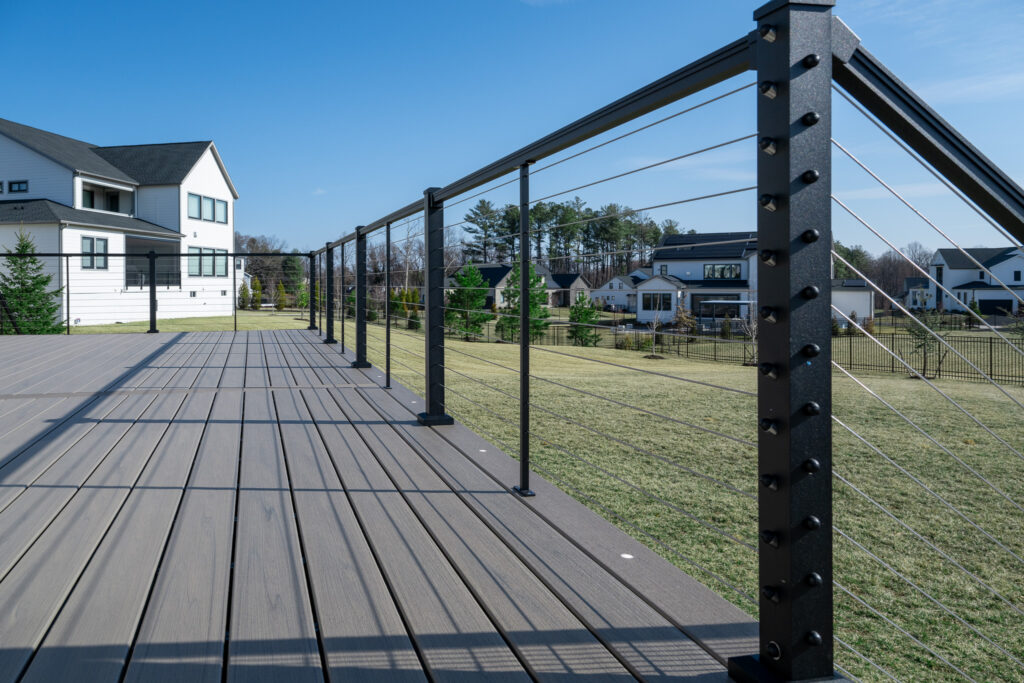
A little of both. Plenty of yards have a flat lawn with a tree line at the back. Sit where you’ll actually sit and look. If the frame is mostly lawn and sky, go horizontal. If the trees fill it, go vertical.
From the yard, you see the railing against the back of the house. It should pick up the lines the house already has.
Vertical suits:
Horizontal suits:
Board and batten is a wall of vertical lines, so vertical balusters look like they were part of the plan. Wide lap siding is a wall of horizontal lines, so a horizontal rail reads as part of the same house. Swap them and the railing looks like it came from a different project.
Around Lake Barcroft, where a lot of the houses are low mid-century designs looking out over the water, horizontal tends to win on both counts.
Sometimes a tall board and batten house looks out over a lake, or a low brick rambler backs up to the woods. When that happens, we usually let the view decide. You see the railing from inside every day, set against whatever is past it. You see it against the house mostly when you’re out in the yard.
There are exceptions. On a front porch, or a deck the whole street can see, the house carries more weight. And when neither direction feels right, glass panels sidestep the question entirely.
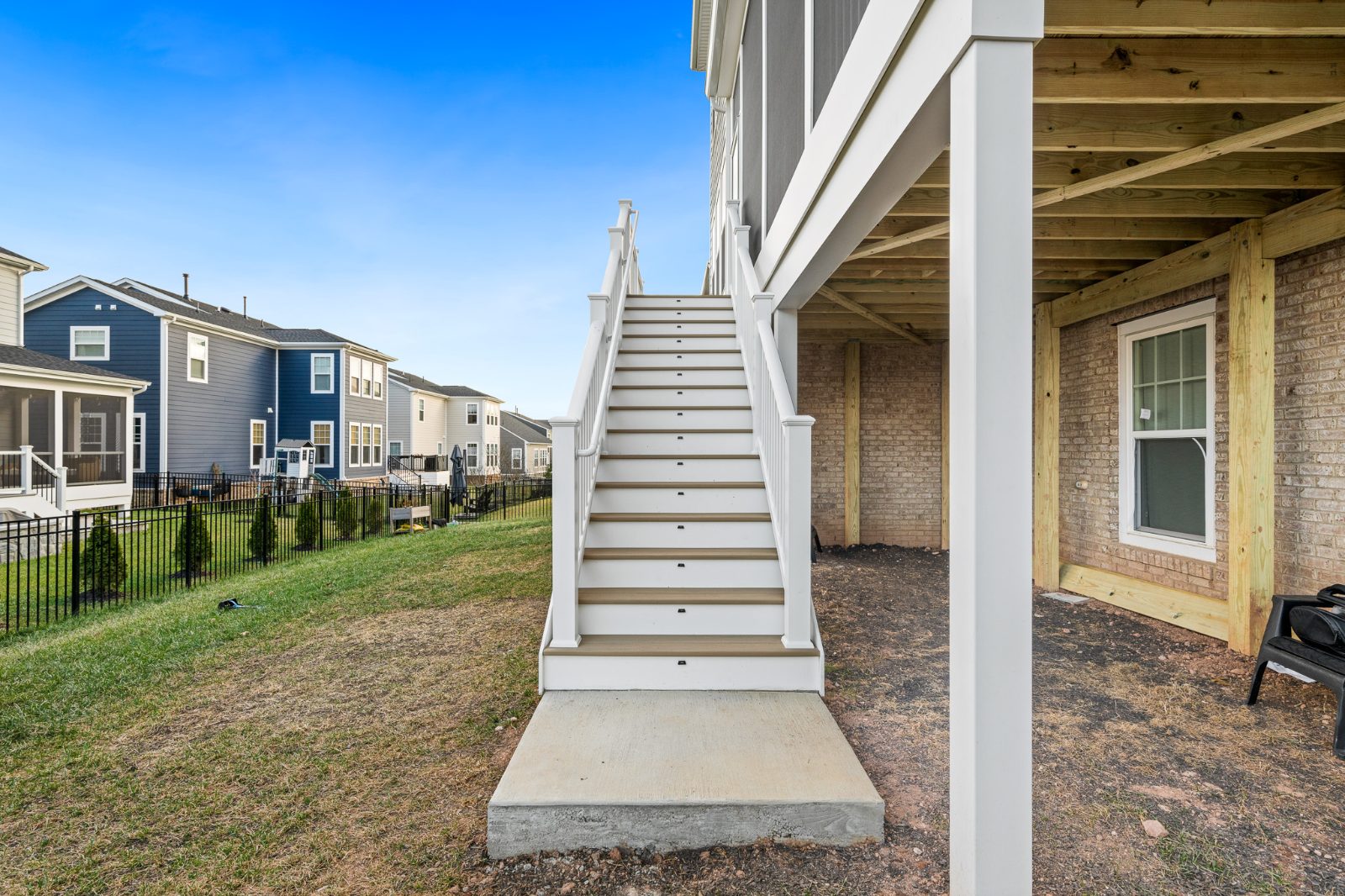
Whichever way you go, carry it through to the stair rails so the whole deck reads as one piece.
Horizontal rails have one real drawback. To a small child, they look like a ladder. Cable and rod rails put a foothold every few inches, and a curious three-year-old will find it.
The code doesn’t ban them. The 2000 edition of the national residential code did prohibit guards with a “ladder effect,” but that language came out in 2001, and neither the residential nor the commercial code restricts horizontal members today. A horizontal railing that meets the normal guard rules, at least 36 inches tall on most homes with no opening a 4-inch sphere can pass through, is allowed. The research behind that change also found that no infill design, even a solid panel, fully stops a child from climbing. Good design just makes it less likely.
So this comes down to your family more than the code. What we talk through with clients who have young kids or grandkids:
Vertical
Horizontal

Neither
| Vertical | Horizontal | |
|---|---|---|
| View | Trees and woods | Lawns, lakes, long views |
| House shape | Tall and upright | Low and wide |
| Style and siding | Craftsman, board and batten, shake | Brick, wide lap siding, mid-century |
| Common options | Aluminum, composite, or wood balusters | Rod rail, cable, slats |
| Climbing | Harder to climb | Easier to climb |
Yes, as long as it meets the normal guard rules. For most homes that means at least 36 inches tall, with no opening a 4-inch sphere can pass through.
They meet code, but they’re easier to climb than vertical balusters. If young children are on the deck often, vertical balusters or glass are the safer choice, and furniture should stay off the railing either way.
It should work with it. Board and batten and shake pair naturally with vertical balusters. Brick and wide lap siding pair naturally with horizontal rails.
Usually horizontal. Horizontal rails run with the horizon, and cable or slim rods are the easiest to see through. Glass is the most open option of all.
Usually vertical. Vertical balusters echo the tree trunks and blend into the woods instead of cutting across them.
The railing is the part of the deck you’ll look at most, from inside and out. Schedule a design consultation, and we’ll show you both directions on your house in 3D before you decide.