If you want a natural stone patio in Northern Virginia, start with bluestone. Thermal or natural cleft, bluestone is the standard natural stone patio around here. Drive through any neighborhood from Herndon to Alexandria and it’s on the front walks, the stoops, and most of the stone patios out back. It’s dense, it holds up to our freeze-thaw winters, and it works with brick, siding, and stone, which covers most of the houses we see.
That doesn’t mean it’s the only answer. Sandstone, travertine, and limestone all make great patios here too, as long as you buy a dense, outdoor-grade stone and it’s set right. Here are the five we’d put in front of you, and what we tell clients about each one.
We’ve covered pavers, flagstone, and concrete in another post. This one is only natural stone.
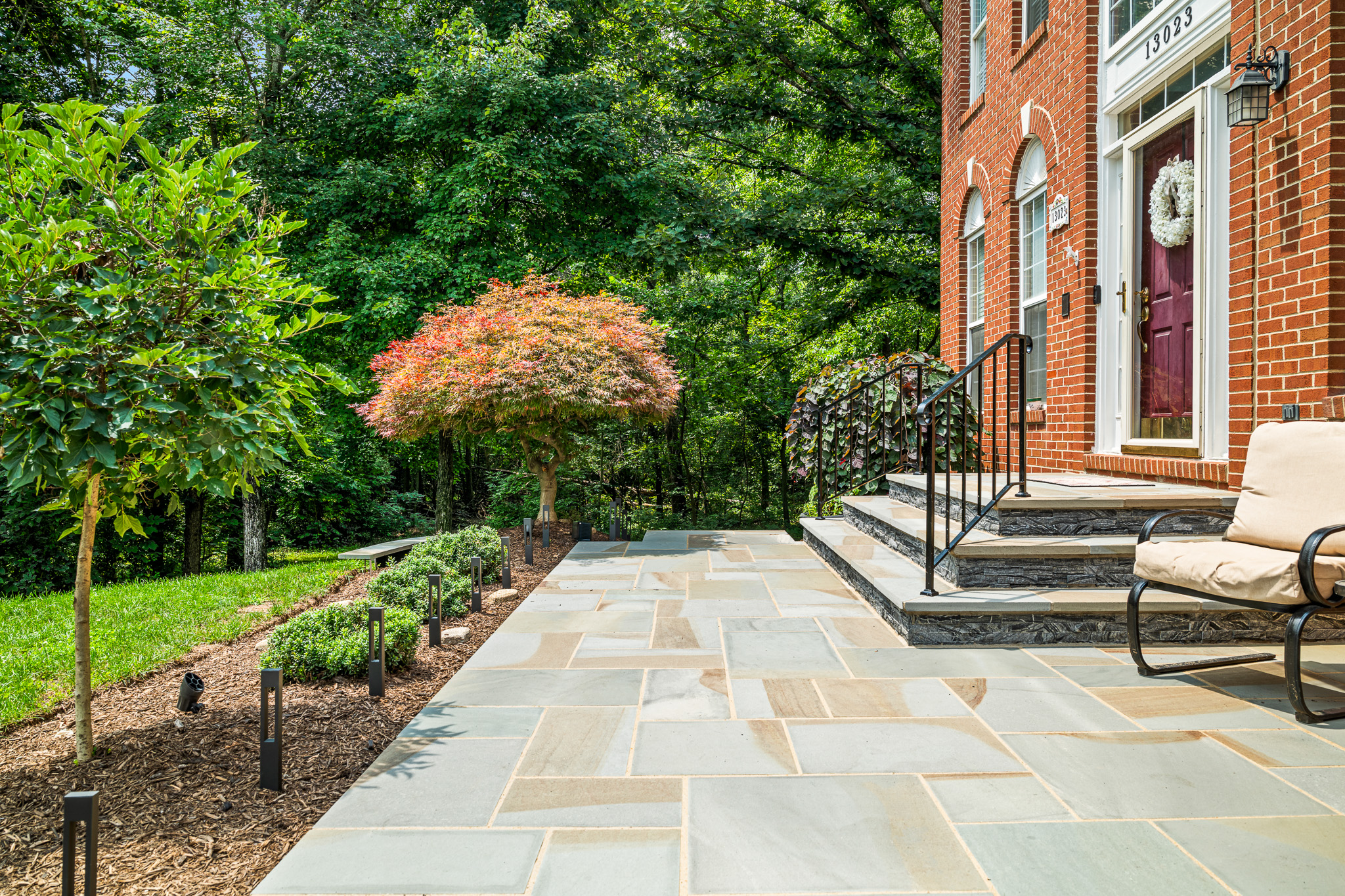
Thermal bluestone is sawn into clean rectangles and squares, then the face is hit with intense heat. That flattens the top and leaves a fine, even texture. It grips when it’s wet, chairs and tables sit flat on it, and it looks just as right next to a modern house as it does next to a colonial.
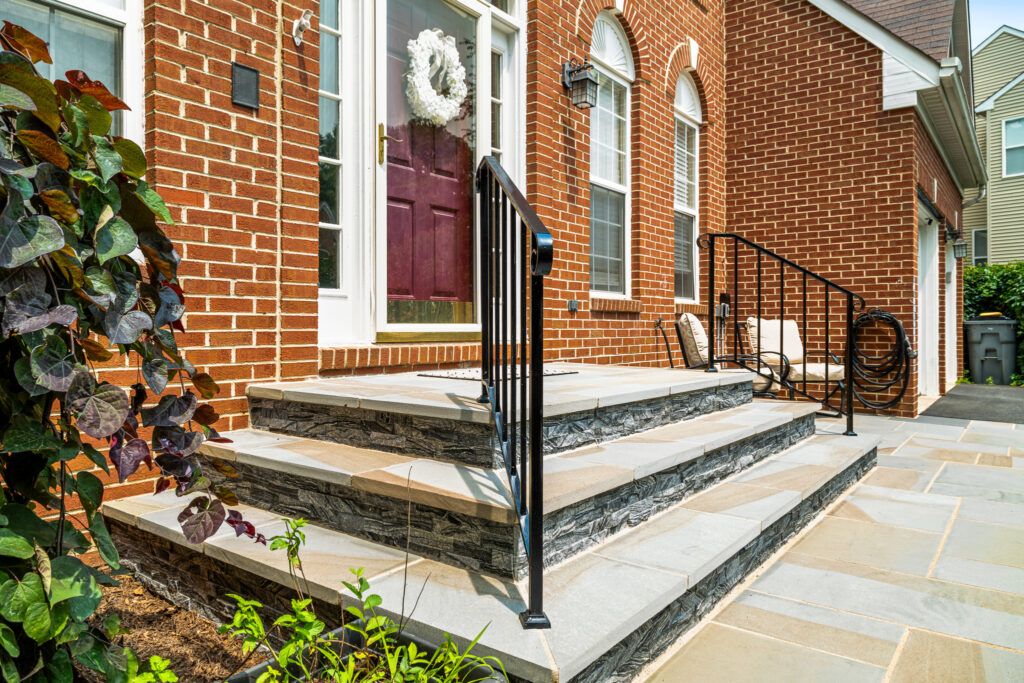
If the patio is where you’re going to eat, this is the one we’d pick. We used it on a front walk, patio, and stoop in Herndon, with bluestone treads over splitface stone risers, and it looks like it’s always been there.
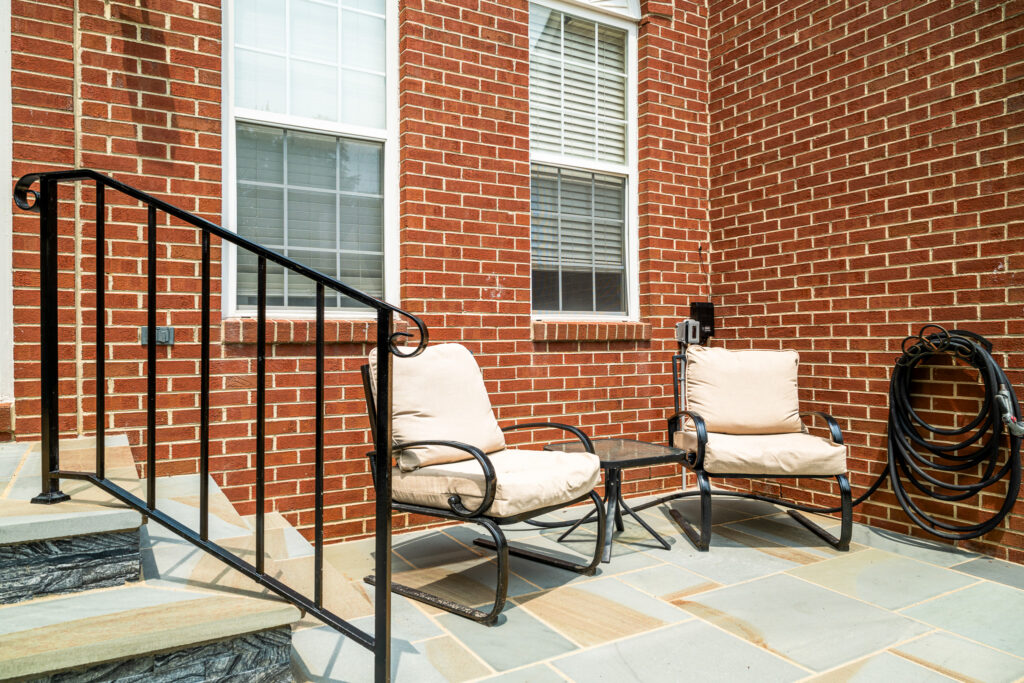
The one thing to know is heat. Bluestone is dark, and dark stone soaks up sun. In full afternoon sun in July, it gets too hot to walk on barefoot. Under a deck, a porch roof, or good shade trees, you won’t notice.
Best for: dining areas, front walks and stoops, steps, wall caps, and colonials and brick homes.
Natural cleft is the same stone, split along its natural layers instead of sawn. The surface keeps the stone’s texture, with ridges, dips, and more color moving through it. You can get it cut into rectangles, or as irregular flagstone fitted together like a puzzle. In the “full color” blends you get blues, grays, lilacs, and rusts.
It’s the more relaxed, natural look. It has the most grip of any bluestone finish, and it usually costs less than thermal.
The trade-off is that it isn’t flat. A dining table and chairs will rock on it. Use it for walkways, garden patios, and lounge areas around a fire pit, and put thermal where the table goes.
Best for: garden patios, walkways, fire pit areas, and traditional or Craftsman homes.
Bluestone is technically a sandstone, but when people say sandstone they mean the warmer stones: buff, tan, gold, and rust. Outdoor design has been moving from gray toward warm, natural tones, and sandstone fits right into that. We built a sandstone patio in Fairfax recently.
Sandstone varies a lot from one quarry to the next. Some is dense and tough, and some is soft and porous. The soft stuff doesn’t last through our winters. Choosing the right quarry matters as much as choosing the color, so this is one where you want a builder who knows where the stone comes from.
Best for: warm color palettes, relaxed modern and Mediterranean homes, and patios that sit next to wood or warm-toned decking.
Travertine is a form of limestone with a naturally pitted surface. It’s usually sold tumbled, with soft edges and an old-world look, in ivory, beige, gold, and walnut. We built a walnut travertine patio in Alexandria.
The light colors stay a lot cooler in the sun than dark stone, which is why you see travertine around so many pools.
In our climate, two things matter. Buy a dense, premium grade, because porous, lower-grade travertine is more likely to crack in freeze-thaw. And set it right: dry-laid on sand over a compacted base, or with a flexible mortar if it goes on concrete. Thickness helps too. Outdoor travertine pavers are commonly 1¼ inches thick, and 2-inch pavers are made for cold climates.
Best for: pool surrounds, Mediterranean and warm-toned homes, and patios in full sun.
Limestone gives you a soft, light, refined patio, in creams, buffs, and light grays. Indiana limestone is the best-known American limestone.
The big advantage is comfort. Light limestone reflects the sun, so it stays cool enough to walk on barefoot, which makes it a favorite for pool decks.
Limestone varies more than any stone on this list. Dense limestone that meets the ASTM standard for limestone handles freeze-thaw fine. Soft, porous limestone doesn’t belong on a Northern Virginia patio. It should sit on a free-draining gravel base so water never sits under the stone.
Best for: pool decks, modern and mid-century homes, large-format patios, and steps and wall caps.
Here’s how the five stack up side by side.
| Stone | Look | Summer sun | Winter | Best uses |
|---|---|---|---|---|
| Thermal bluestone | Clean rectangles, even texture, blue-gray or full color | Gets hot | Handles freeze-thaw well | Dining areas, walks, stoops, steps |
| Natural cleft bluestone | Split face, textured, more color | Gets hot | Handles freeze-thaw well | Garden patios, walkways, fire pit areas |
| Sandstone | Buff, tan, gold, rust | Stays cooler when light | Dense stone only; quarry matters | Warm color palettes, relaxed homes |
| Travertine | Ivory to walnut, tumbled, pitted | Stays cool when light | Premium grade, set on sand or flexible mortar | Pool surrounds, warm-toned homes |
| Limestone | Cream, buff, light gray | Stays coolest | Dense grade only | Pool decks, modern homes, caps |
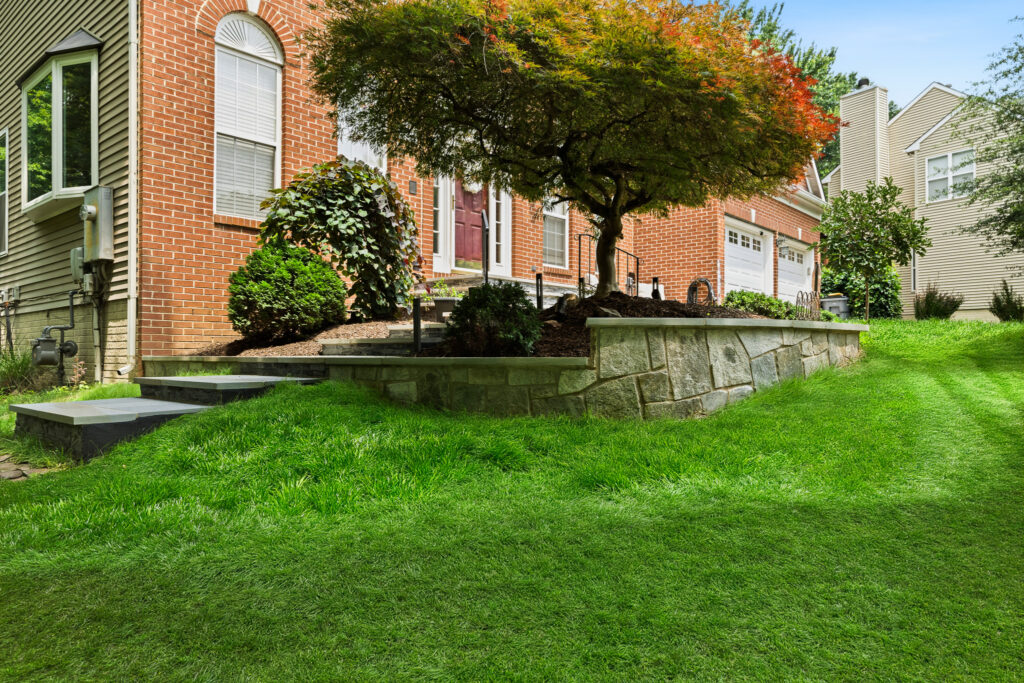
Some of the best patios use two. A thermal bluestone dining area with natural cleft around the fire pit. A bluestone field with a granite cobble border. A stone retaining wall with a thermal bluestone cap, like this Maryland blend wall in Herndon. Mixing stones is one of the easiest ways to make a hardscape look designed instead of just installed.
Stone only lasts as long as what’s under it. There are two ways to set it. Dry-laid stone sits on a compacted gravel base with a sand setting bed. Water drains through, and if one stone ever settles, you lift it and reset it. Mortar-set stone is bonded to a concrete slab for a solid finish with tight joints. Either way, the base gets dug out, compacted, and pitched so water runs away from the house.
Shovel early, go easy on deicer, and throw down sand for traction instead of rock salt wherever you can. No paving material is completely immune to deicing salt, and salty meltwater that soaks into stone and refreezes can flake the surface. Limestone and travertine are the most sensitive.
Concrete pavers and porcelain pavers give you the look of stone with more consistency. Pavers are the easiest to repair, and porcelain is dense and resists deicing salt. We compare those in our patio materials post. And if you’re still deciding between a patio and a deck, here’s when a patio beats a deck.

Bluestone, in either a thermal or natural cleft finish. It suits the architecture here, it handles freeze-thaw well, and it works with brick, siding, and stone.
Choose thermal where you’ll put a table and chairs, because it’s flat and even. Choose natural cleft for walkways, garden patios, and fire pit areas, where you want more texture and grip and a slightly lower price.
Light-colored stone, like limestone and ivory or beige travertine. Color matters more than the type of stone, so dark bluestone gets the hottest.
Yes, if you buy a dense, premium grade and set it on sand or with a flexible mortar. Lower-grade, porous travertine is more likely to crack in freeze-thaw.
Dense sandstone is. Soft, porous sandstone isn’t. It varies by quarry, so ask where the stone comes from before you choose it.
Use as little as possible, and use sand for traction where you can. Salty meltwater that soaks into stone and refreezes can damage the surface, and limestone and travertine are the most sensitive.
Choosing stone for a new patio? Tell us about your project, or schedule a design consultation with our team.