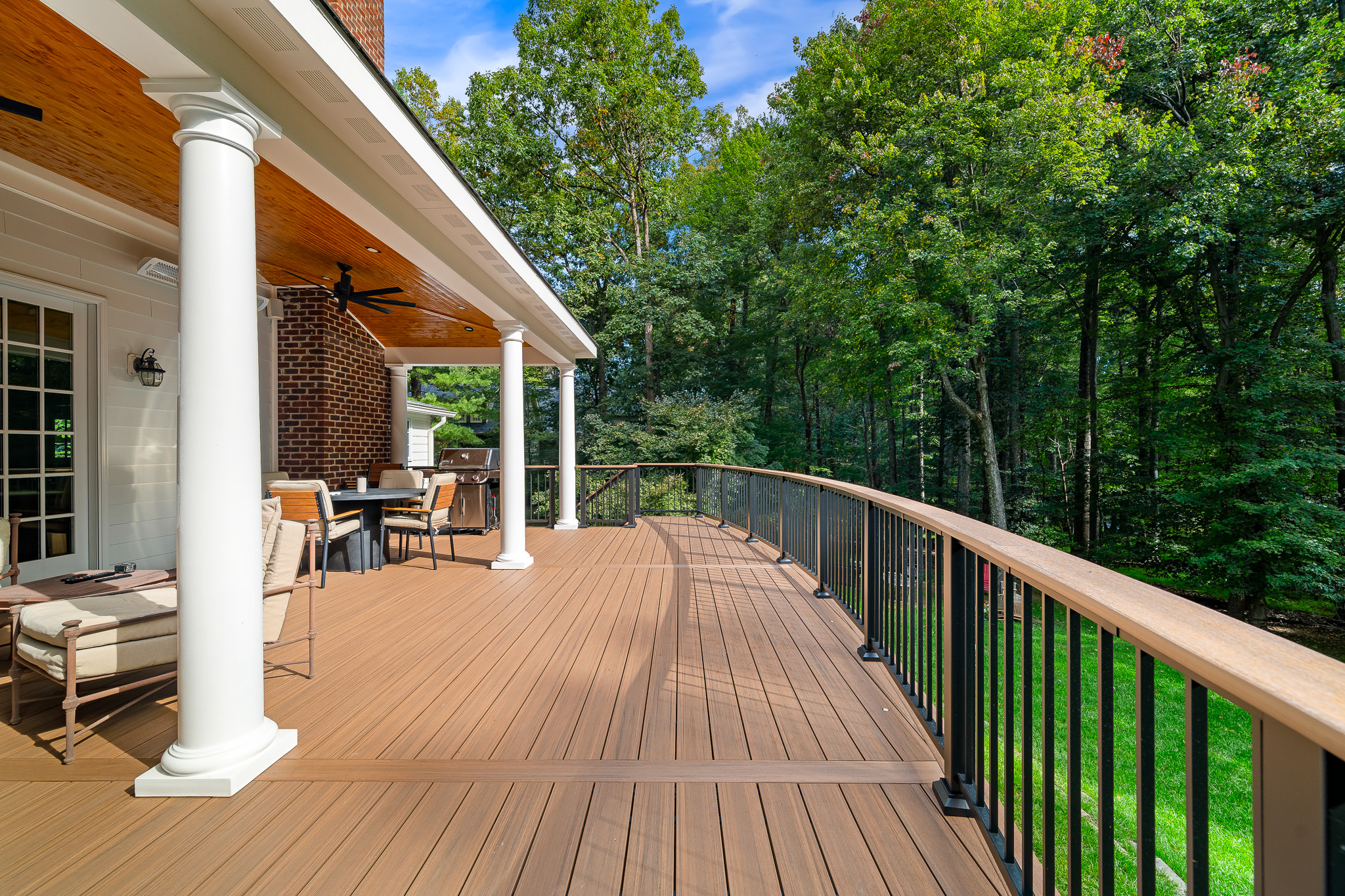
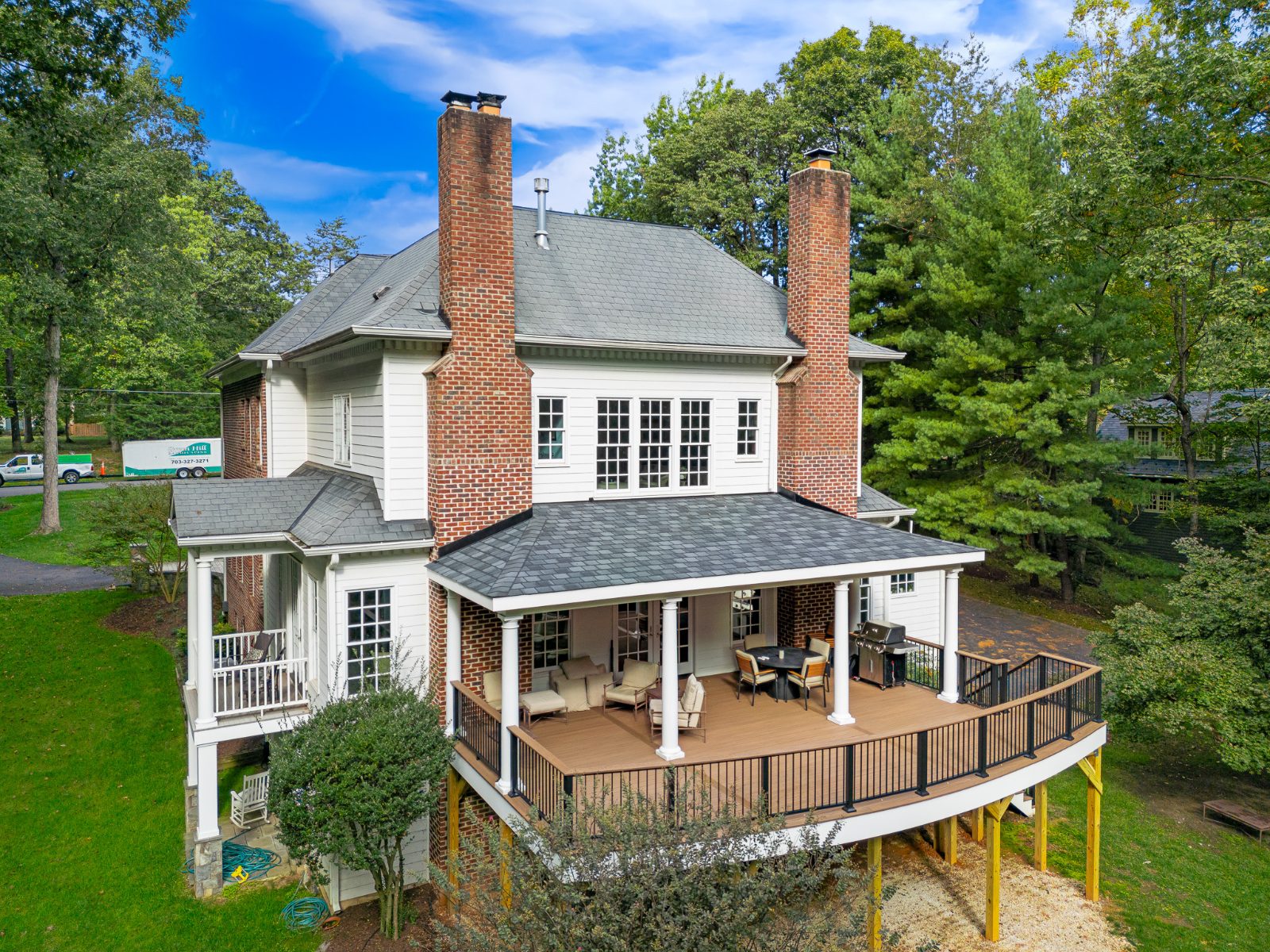
Hardscaping is everything in your yard built from stone, pavers, brick, or concrete: patios, walkways, walls, steps, fire features, outdoor kitchens, and driveways. A custom patio is designed around how you’ll use it, how water moves across your lot, and how it connects to the house. It isn’t a rectangle poured off the back door. Done well, it’s the part of an outdoor living space that lasts the longest and asks the least of you.
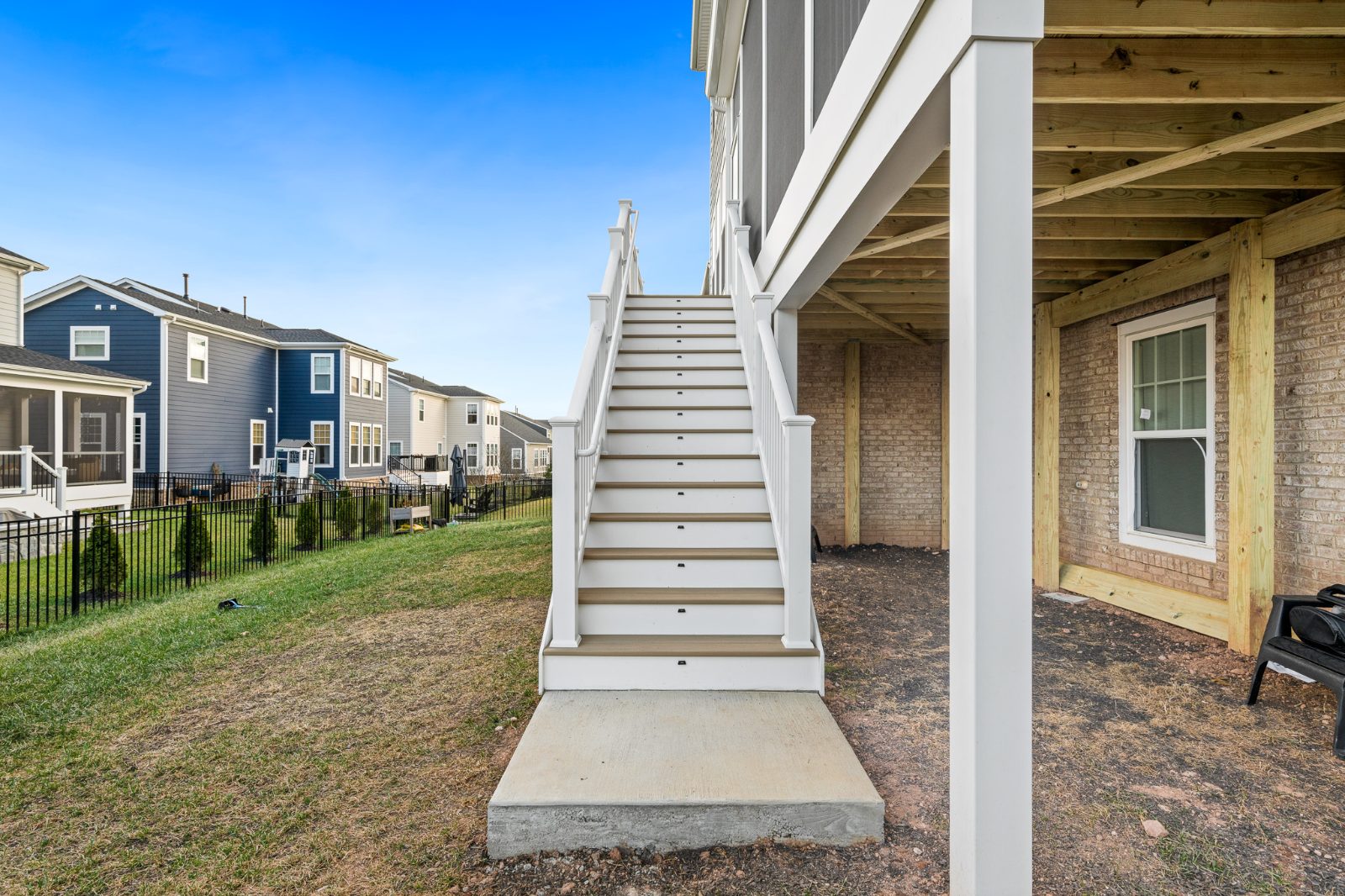
A deck lifts you above the yard. A patio puts you in it. More and more of our clients want both, usually a deck or porch off the kitchen with steps down to a patio for a fire pit, a dining table, or an outdoor kitchen.
Stone and pavers handle heavy furniture, grills, and fire better than any deck surface. A well-built patio also outlasts almost everything else in the yard.
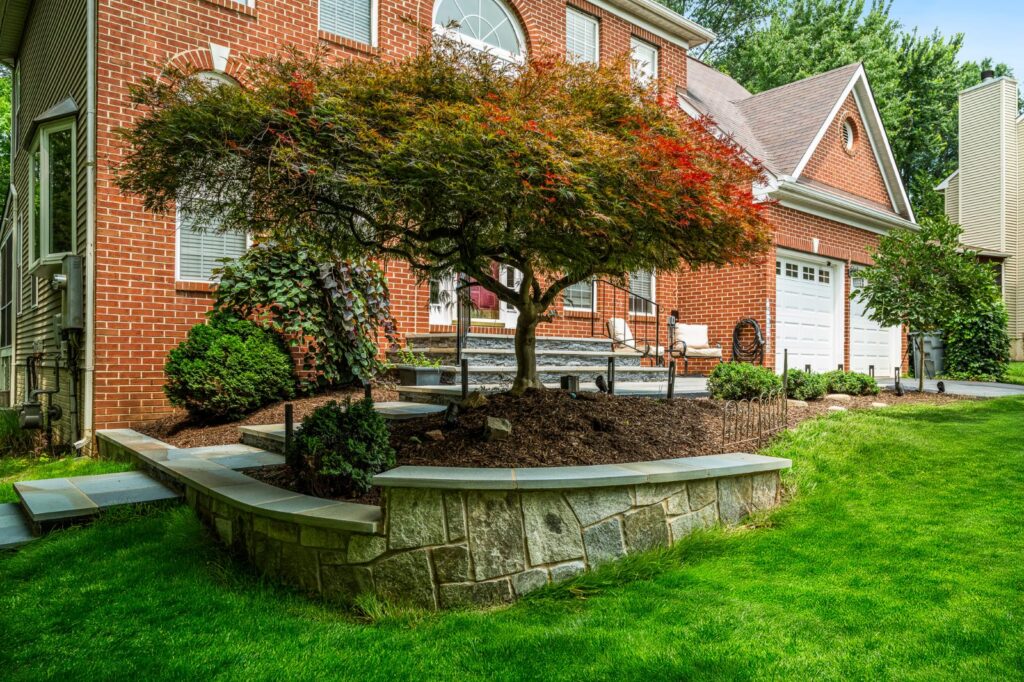
Hardscaping is where a lot of the real design happens, too. Walls create rooms. Steps and level changes create flow. A fireplace or a seat wall gives a space somewhere for your eye to land. These are the pieces that make a backyard feel finished instead of furnished.
Pavers, natural flagstone, thermal flagstone, sandstone, brushed concrete, and stamped concrete all have a place. The right one depends on the architecture, how formal or relaxed you want the space to feel, and how much texture and color variation you like. We compare each of them in our guide to patio materials.
A few recent ones: a thermal bluestone front walkway and patio in Herndon, a sandstone patio in Fairfax, and a walnut travertine patio in Alexandria. Three houses, three different stones, and each one fits its house.
The part nobody sees matters most. A patio has to move water away from the house, and on a lot of Northern Virginia lots that means working with clay soil, slopes, and downspouts that drain right where you want to sit. We plan drainage as part of the design, whether that’s a careful pitch, a channel drain, or downspouts piped underground and out of the way.
Most patio problems start below the surface. Settling, heaving, and pavers that drift apart almost always trace back to a base that wasn’t excavated deep enough or compacted properly. The base is the least glamorous part of the job and the one we’re least willing to rush.
Fire pits, fireplaces, outdoor kitchens, seat walls, and retaining walls turn a flat surface into an outdoor room. They also give a space a reason to be used on a Tuesday night, not just at the one party a year. We go through each of them in our post on patio features.
A patio usually makes the most sense when the back door sits close to the level of the yard, or when you want fire, a kitchen, or room for a big group. A deck makes more sense when the house sits high and you need to bridge the drop. We break down exactly when a patio beats a deck in our patio vs. deck guide. Many of the best projects we design use both, connected by wide steps so the whole yard reads as one space. If you’re weighing options, our post on choosing between a deck, screened porch, three-season room, and patio walks through it.
The rules vary by jurisdiction, and they matter more than most people expect. In Arlington, for example, a patio at grade doesn’t count toward lot coverage, but a patio built more than 8 inches above grade does. Taller retaining walls can require engineering and a permit. Gas lines and electrical work for fire features and kitchens need permits almost everywhere.
We check the rules for your property during design, so the plan you fall in love with is one that can actually be built.
What is hardscaping?
Hardscaping is the built, non-living part of a landscape: patios, walkways, walls, steps, fire features, outdoor kitchens, and driveways made from stone, pavers, brick, or concrete.
How long does a paver or stone patio last?
A patio built on a properly excavated and compacted base can last for decades. Most early failures come from a poor base, not the stone or pavers themselves.
Do I need a permit for a patio in Northern Virginia?
It depends on the jurisdiction and the design. A simple patio at grade often doesn’t need a building permit, but raised patios, taller retaining walls, gas lines, and electrical work usually do. We research the requirements for every project.
Should I build a patio or a deck?
If your back door is close to grade, a patio is usually the better fit, especially for fire features and outdoor kitchens. If the house sits high, a deck connects you to the yard. Many homes are best served by both.
The difference between a patio and a great patio is almost always decided before the first shovel hits the ground. Tell us about your project, and we’ll show you what your yard could become.