We love open porches, but they’re not for this area. That’s Southern California. In Northern Virginia, mosquitoes own the summer evenings, so most of the porches we build get screened. Once you decide to screen, the types of porch screens come down to two choices: the mesh you look through, and the system that holds it on the porch.
The short version: standard fiberglass mesh keeps mosquitoes out and is what most porches have. Pet screen is a lot stronger and stands up to dogs and kids. No-see-um mesh stops the tiny biting bugs that slip through standard screen. Solar screen cuts afternoon heat and glare. For the system, a snap-on track like Screeneze holds the screen tighter than staples and trim, and you can replace a torn panel without tearing anything apart.
You’re going to look through this mesh every day, so pick it on purpose. Screen is sold by mesh count, the number of strands per inch in each direction. Standard screen is 18 by 16. A higher count means smaller openings, which stops smaller bugs but lets a little less air and light through.
Standard fiberglass is vinyl-coated fiberglass in charcoal or silver gray, woven 18 by 16. It keeps mosquitoes out, it’s flexible, it won’t crease the way aluminum can, and it costs the least. It’s what we use on most of our porches, because it’s the best fit for most clients.
Go with charcoal. Darker mesh is easier to see through, so the yard looks sharper from inside and the screen kind of disappears.
Pet screen is a heavier vinyl-coated polyester. Phifer rates its PetScreen at seven times stronger than regular insect screening, so it holds up to claws, noses, and kids leaning on it. It’s thicker, which means the view is a little darker and a little less air comes through. If the dog is going to be out there all summer, it’s worth it, and we offer it.
No-see-ums are biting midges small enough to get through standard screen. No-see-um screen uses a tighter 20 by 20 weave to stop them. It still breathes, slightly less than standard mesh. If your porch sits near water or low, wet ground, ask about it.
Solar screen is a heavier mesh made to block sun. Phifer’s SunTex 80 and SunTex 90 block up to 80 and 90 percent of the sun’s heat and glare, and they still keep the bugs out. You give up some view and some breeze, so it usually goes on the side that takes the afternoon sun, not all the way around. You also get some daytime privacy out of it.
The same solar fabric comes on motorized shades that roll down only when you want them. Solar shades are one of the porch upgrades we offer.
Metal screen is stronger than fiberglass. Aluminum is the common one. It holds up to wear, but it can dent or crease if something hits it. Stainless steel and bronze are the premium options, for porches where the screen itself is part of the look. Bronze screen is 90 percent copper and 10 percent zinc.
A great mesh still looks bad if it’s loose. The mounting system decides whether the screen stays tight, how clean the framing looks, and what happens when something tears it.
The old-school way staples the screen to the framing and covers the staples with thin wood or PVC strips. It’s simple and uses the least material. The problem is getting it tight by hand, and fixing a tear means prying off trim and pulling staples.
Systems like Screen Tight fasten a vinyl base to the framing. The screen gets rolled into the base with spline, the rubber cord you see in window screens, and a cap snaps over the top.
An aluminum base goes on the framing, the screen lies over it, and a vinyl cap snaps on. The cap stretches and locks the screen as it seats, so there’s no spline to roll. If a panel tears, you pop the cap off, swap the screen, and snap it back on. The profile is slim. Screeneze comes in white, sand, bronze, and clay to match the trim, and the base and cap carry a 10-year limited warranty.
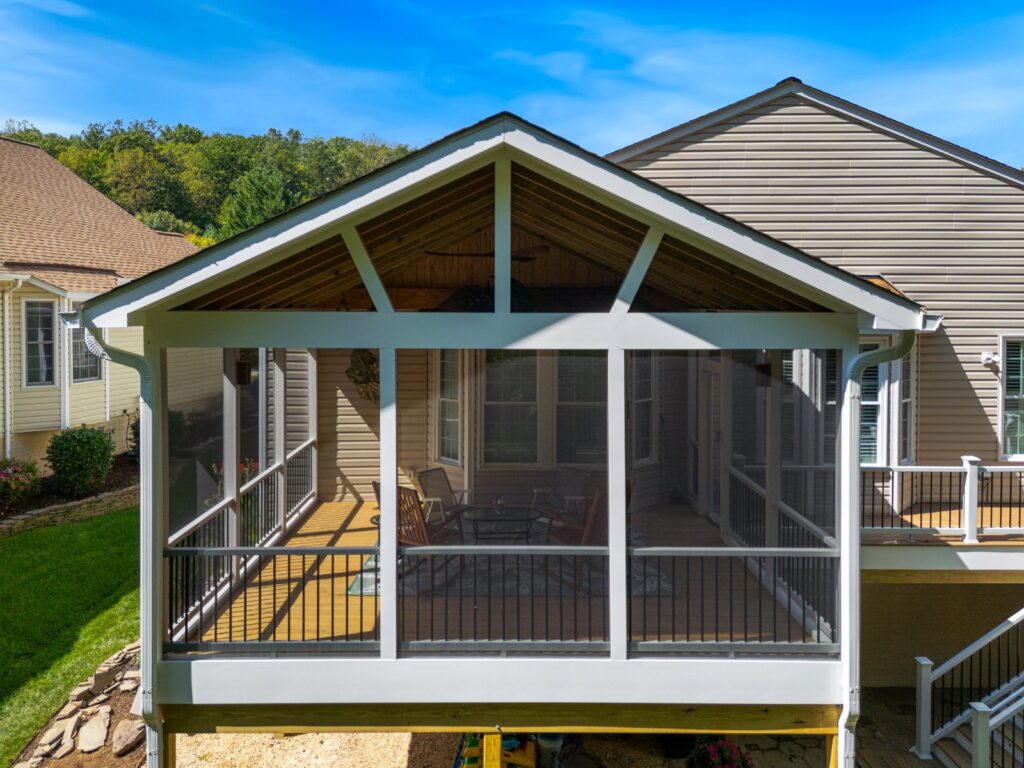
Screen panels built in aluminum frames set into the porch openings as a unit, so they go in quickly.
Retractable screens roll up into a housing at the top of the opening and drop down when you want them. Motorized retractable screens can span openings as wide as 24 feet and up to 16 feet high, so they’re great on a big opening that looks out at a view.
Where they shine is where a screened porch opens onto a deck. Roll the screen up on a dry evening and the porch and deck become one space. They cost a lot more than fixed screens, so they usually make the most sense on one or two key openings, with fixed screens everywhere else.
If you want the porch in March and November too, vinyl window panels turn it into a three-season room. We use Porch Conversions panels. They’re memory vinyl sashes in an aluminum frame, made in America, that slide up and down or side to side. Open them and you have a screened porch. Close them and you block the wind and rain.
Memory vinyl flexes instead of breaking and goes back to its shape after a hit, which is what you want on a porch where kids and dogs play. The panels fit into the screen openings, so it’s easiest to plan for them when we design the porch, even if you add them later.

The screens are only as good as the porch around them. These are the details we sweat:
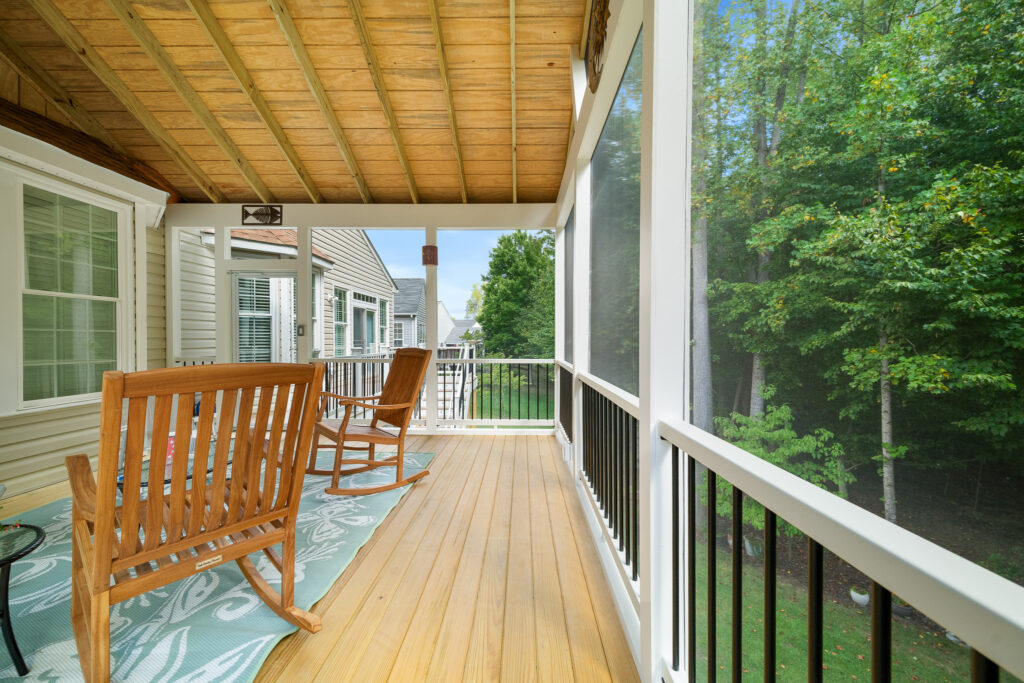
Here’s where each type of screen fits and what it costs you.
| Screen | Best for | Trade-off |
|---|---|---|
| Standard fiberglass, 18 by 16 | Most porches, mosquitoes | Tears more easily than pet or metal screen |
| Pet screen | Dogs, cats, kids, and the screen door | Slightly darker view, a little less airflow |
| No-see-um, 20 by 20 | Porches near water or wet ground | Slightly less airflow and light |
| Solar screen | Walls that take hard afternoon sun | Darker view and less breeze |
| Aluminum | More durability than fiberglass | Can dent or crease |
| Stainless steel or bronze | Porches where the screen is part of the look | Premium price |
Still planning the rest of the porch? Here’s how the types of porch roofs compare, what screened porch costs look like in Northern Virginia, and how a screened porch stacks up against a deck, a three-season room, and a patio.
For most porches, charcoal fiberglass, held in a track system like Screeneze. It’s what we use on most of our porches. Go with pet screen if dogs or kids use the porch, no-see-um screen if tiny biting bugs are a problem, and solar screen on walls that take hard afternoon sun.
If a dog or young kids use the porch, usually yes. Phifer rates its PetScreen at seven times stronger than regular insect screening. You trade a slightly darker view and a little less airflow.
A little. The 20 by 20 weave has smaller openings than standard 18 by 16 screen, so slightly less air and light gets through.
Yes. Solar screen gives good outward visibility and daytime privacy, but the view is darker than through standard screen.
Both fasten a base to the porch framing and cover it with a snap-on cap. Screen Tight holds the screen with spline rolled into the base. Screeneze uses an aluminum base and a vinyl cap that grips and stretches the screen as it snaps on, with no spline.
Often, yes. Vinyl window panels can fit into many screen openings. It’s easiest when the porch is designed with them in mind.
Planning a screened porch, or screening in a porch you already have? Tell us about your project, or schedule a design consultation with our team.