Most professionally designed and built decks in Northern Virginia cost about $65 to $200 per square foot, depending on the decking material, how high the deck sits, the railing, and how much custom detail goes into it. In our recent proposals, most decks came in between about $15,000 and $60,000, and large or multi-level decks can pass $100,000. For reference, the 2025 Cost vs. Value report put a basic 16-by-20-foot composite deck in the Washington, D.C. area at about $23,400.
That’s a wide range, and it should be. A 300-square-foot deck two steps off the patio door and a curved, multi-level deck off a second-floor kitchen are different projects. Here’s what actually moves the number.
These are installed ranges from our own recent proposals for complete decks, including framing, footings, decking, railing, and labor, not the price of the boards alone.
Smaller decks tend to cost more per square foot, because stairs, railing, footings, and setup don’t shrink in step with the deck.
The decking itself is only part of the cost. Two decks with the same boards can be tens of thousands of dollars apart because of everything else on this list. We compare the two big composite brands in Trex vs. TimberTech and the natural option in tropical hardwood vs. composite decking.
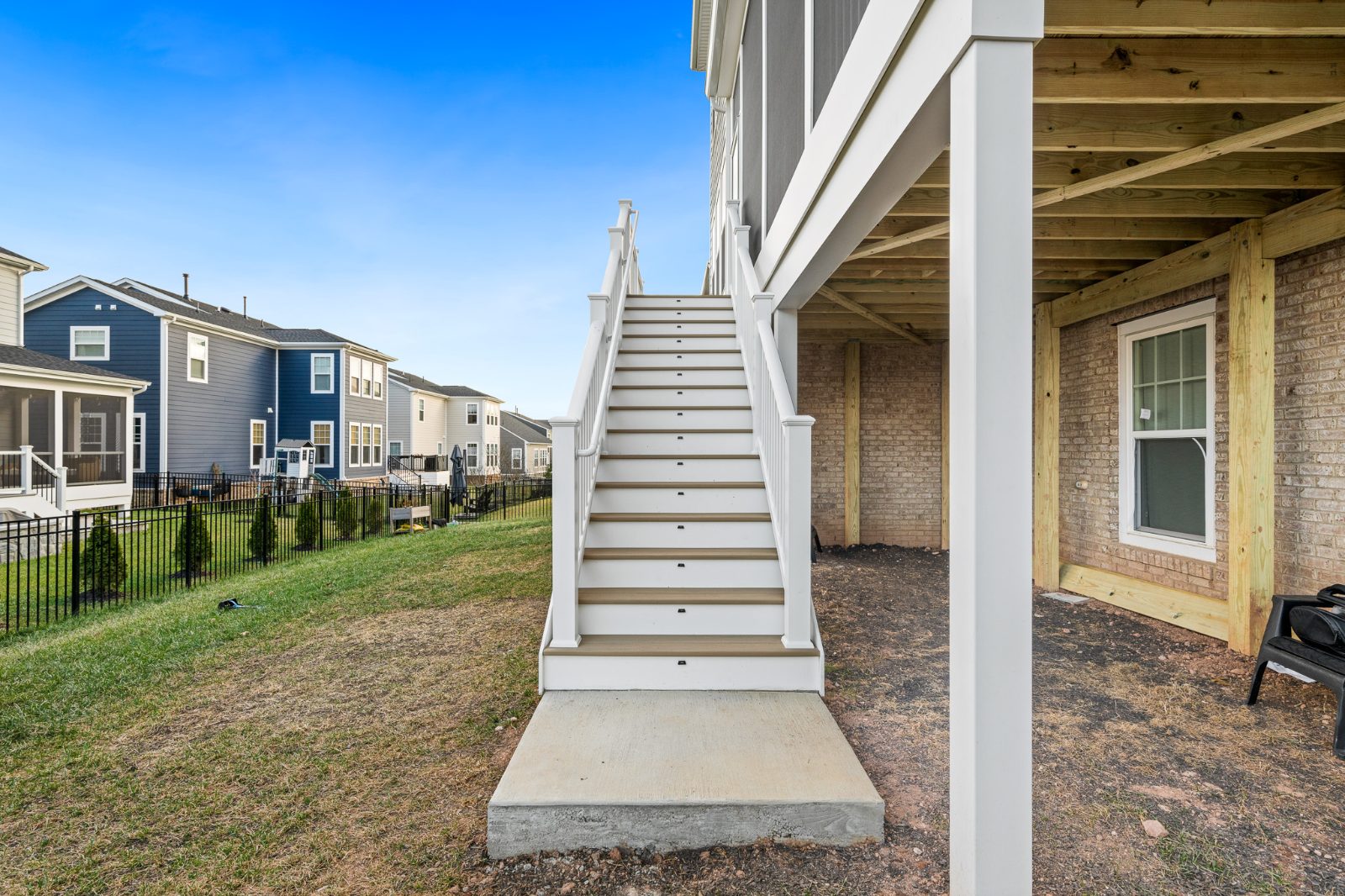
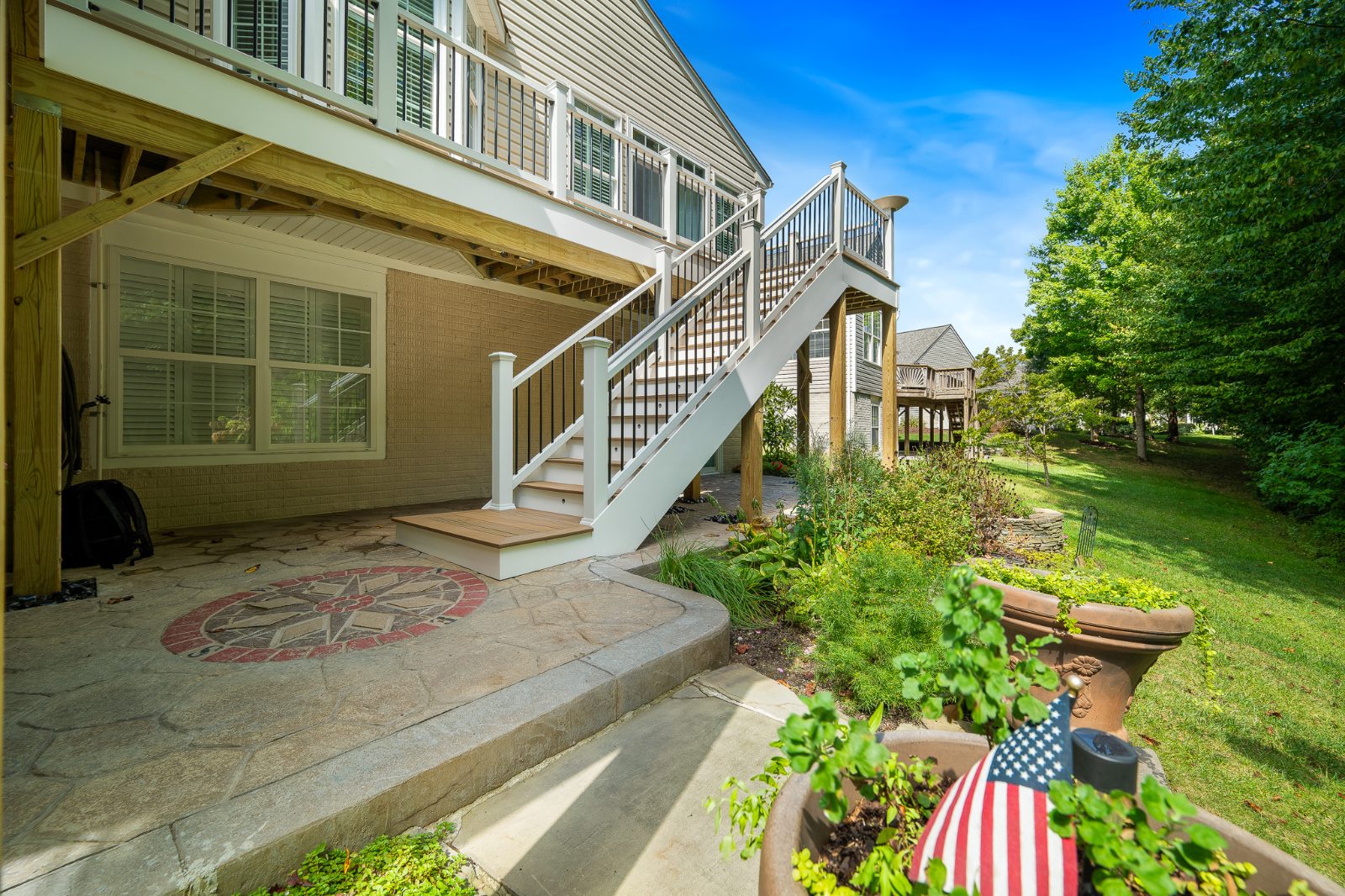
A deck close to the ground usually costs less than the same deck off a first-floor kitchen eight or ten feet in the air. The main reasons are that a ground-level deck often doesn’t need railings, and it takes less labor time to build. Taller decks also need more stairs and more bracing.
You see the railing from everywhere, and it’s often one of the largest line items, commonly 20 to 35 percent of the deck budget. Black aluminum, cable, glass, and composite railings all price differently, and stair railing costs more per foot than straight runs. We cover the options in deck railing ideas.
Wide stairs, landings, and turns make a deck easier to use and better looking, but every step adds stringers, treads, risers, and railing.
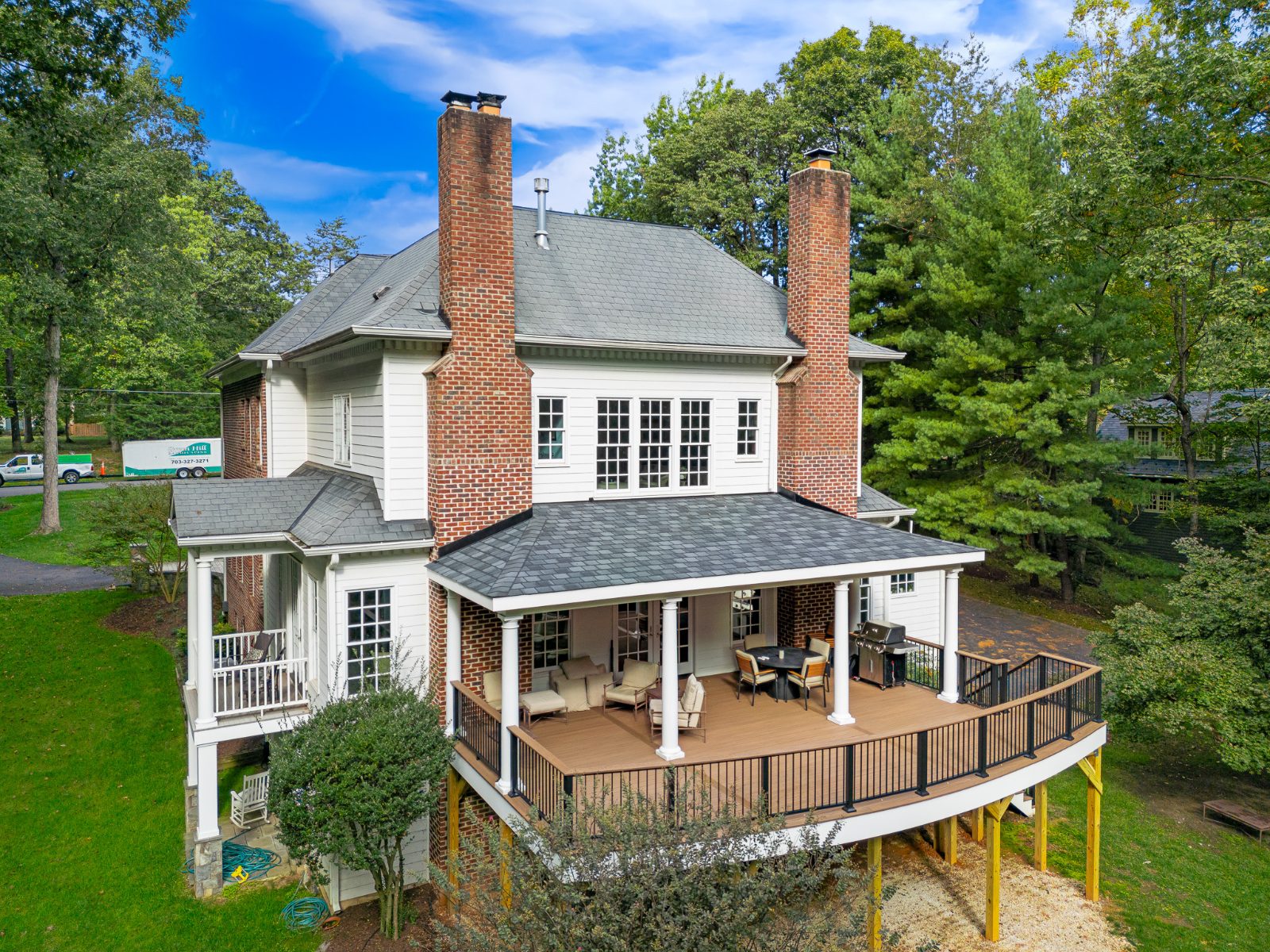
Straight rectangles are the most efficient to build. Angles, curves, multiple levels, picture-frame borders, inlays, and built-in benches each take more material and more hours. Curved decks in particular call for curved framing and curved railing, which some builders won’t take on at all.
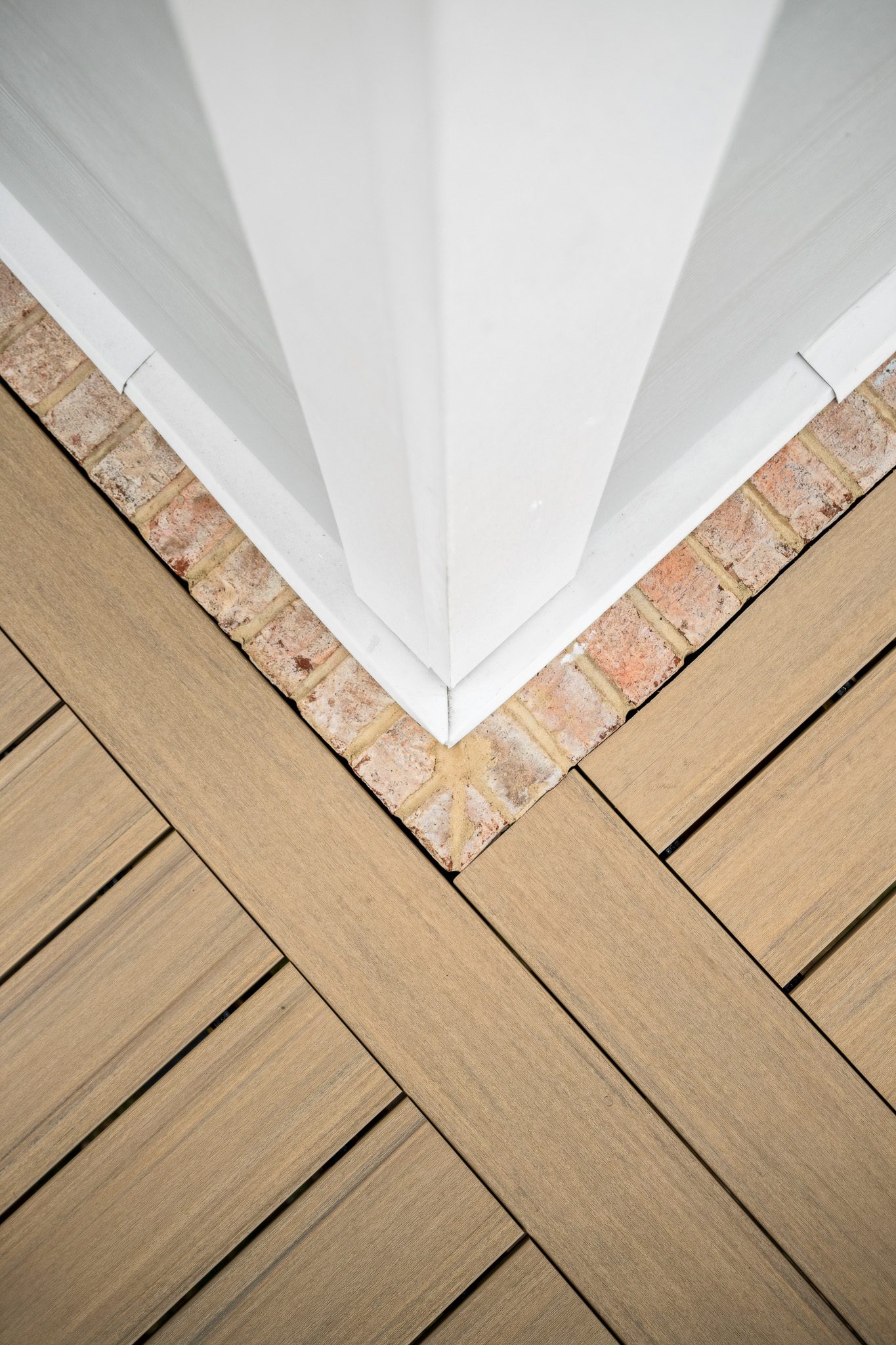
PVC fascia and trim, like the Versatex we use, wrap the framing so the deck looks finished from the yard. Stair lights, post cap lights, and under-rail lighting add wiring and electrical inspections. Hidden fasteners keep the surface clean. None of these is expensive on its own, but together they’re part of what separates a custom deck from a basic one. See PVC trim for decks and porches for more.
If there’s an existing deck, demolition and disposal can run anywhere from about $1,000 to $6,000 or more. It’s a wide range because it depends on the material, the size of the deck, how much excavation is involved, and how the debris has to be hauled away.
Nearly every new deck in Northern Virginia needs a building permit, which means building plans, a plat showing the deck’s location, and inspections. Steep slopes, tight access, soft soil, utilities, and trees all affect how footings go in and how long the work takes.
Price varies with more than scope. Overhead, customer experience, and craftsmanship are part of every number. Skilled craftsmen and true project management cost more than a business run out of someone’s house with whatever help it can find, and that difference shows in how the project runs and how the deck holds up.
If you think you might want a roof, a pergola, or a screened porch over part of the deck someday, say so at the start. Footings and beams can be sized for that load now for a modest added cost. Adding that capacity later usually means rebuilding the structure underneath.
In the same 2025 Cost vs. Value report, a composite deck in the Washington, D.C. area recovered about 107 percent of its cost at resale, one of the highest returns of any project in the report. A wood deck recovered about 86 percent. Those figures are for basic decks, but they show buyers here put real value on outdoor living space.
When you compare proposals, compare the scope, not just the total. A clear proposal should spell out:
Two proposals for “a composite deck” can describe very different projects. If one is far lower than the others, the difference is usually in the framing, the railing, the details, or what’s left out.
How much does a 16×12 deck cost in Northern Virginia?
A 16×12 deck is 192 square feet. In our recent proposals, decks of that size mostly ran about $12,000 to $37,000. The low end is a simple pressure-treated deck close to the ground. The high end is composite or PVC with aluminum railing, stairs, trim, and lighting.
Is composite decking worth the extra cost?
For most homeowners, yes. Composite costs more up front than pressure-treated wood but doesn’t need staining or sealing, won’t splinter, and lasts decades with simple cleaning. Over 15 to 20 years, the maintenance savings close much of the gap.
Why do deck prices vary so much between builders?
Scope is a big part of it. Footing depth, framing quality, railing type, trim, lighting, and whether building plans and permits are included all change the number. Overhead, customer experience, and craftsmanship matter too, since skilled craftsmen and true project management cost more than a business run out of someone’s house. Compare line by line, and ask who will build and manage your project.
Does a deck need a permit in Northern Virginia?
Yes. Fairfax, Arlington, and Loudoun counties all require a building permit for new decks. We explain the details in do you need a permit for a deck in Fairfax County?
When is the best time to build a deck?
We build through the winter, and starting the design in fall or winter is often the easiest way to have a finished deck by spring, because permits and material orders are already done when the busy season starts.
Every deck we build starts with a design consultation, where we talk through how you’ll use the space and what you want to invest. From there we design it in 3D and prepare a detailed proposal, so you can see the project and its cost before anything is built. Schedule a design consultation to get started.